
Share!
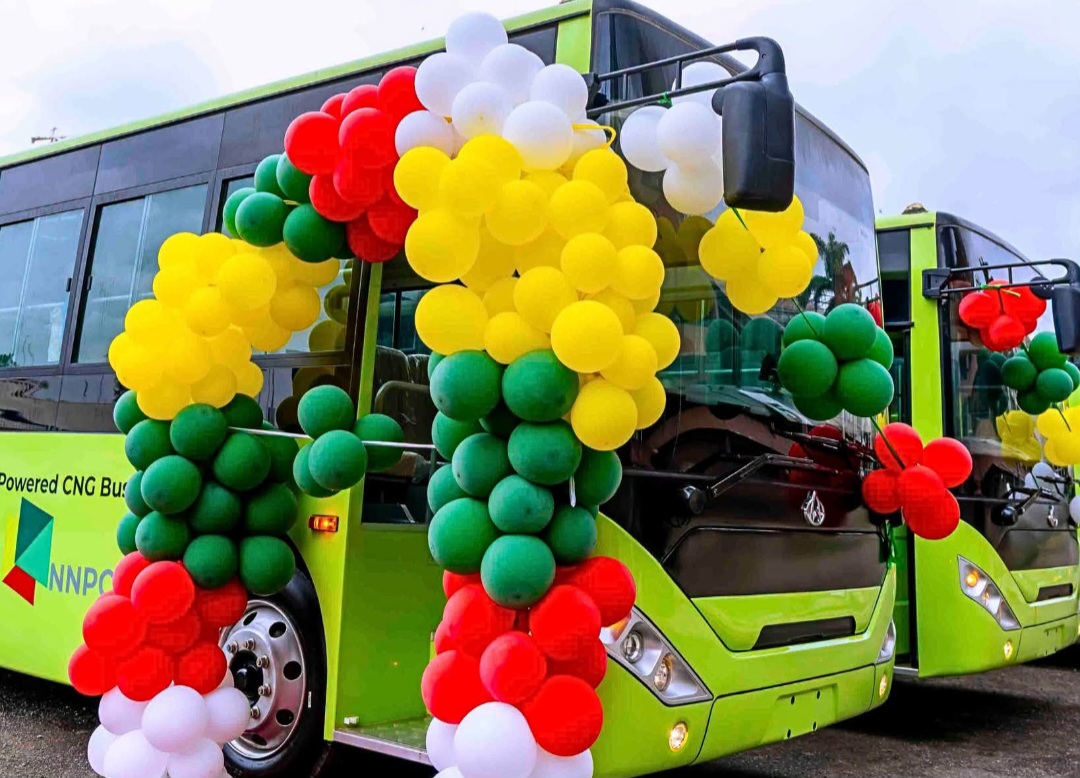
The Federal Government has defended its ₦100 billion Compressed Natural Gas (CNG) initiative amid questions over the implementation of its original plan to procure 3,000 gas-powered buses to ease transportation costs following the removal of petrol subsidy.
President Bola Tinubu announced the proposed investment in July 2023 as part of measures to cushion the economic impact of subsidy removal. The plan envisaged deploying 3,000 20-seater CNG buses, with participating transport companies expected to access financing at an annual interest rate of nine per cent over a five-year repayment period.
The initiative was subsequently expanded to include CNG-powered buses and tricycles, electric vehicles and conversion kits, alongside the development of refuelling and vehicle-conversion infrastructure.
In April 2024, the Presidency announced plans to deploy about 5,600 CNG and electric vehicles, as well as more than 20,000 conversion kits, under the programme.
However, questions have persisted over the extent to which the initiative has achieved its original objectives, particularly regarding the availability of buses, the utilisation of the allocated funds and the programme’s impact on transport fares.
In August 2025, the House of Representatives commenced an investigation into the implementation of the CNG policy and the management of the ₦100 billion intervention fund. The probe was also designed to examine the distribution of conversion centres, safety standards and claims of private-sector investment in the programme.
The investigation followed concerns about limited access to conversion facilities and the need to establish whether the initiative was delivering the intended benefits to Nigerians.
Meanwhile, the Federal Government has continued to promote CNG as a cheaper alternative to petrol and diesel, arguing that wider adoption of gas-powered vehicles could lower transport operating costs and provide relief to commuters.
The initiative has also received renewed attention amid efforts by the Federal Government and state governments to expand affordable mass transportation and reduce the wider economic consequences of high transport costs.
Despite these efforts, the central questions surrounding the programme remain: how much of the original ₦100 billion allocation has been effectively utilised, what happened to the initial 3,000-bus target, and to what extent have ordinary Nigerians benefited from the investment?
The answers will be crucial in determining whether the CNG initiative can fulfil its promise of affordable transportation or become another government intervention whose ambitions outpace its implementation.
