
Share!
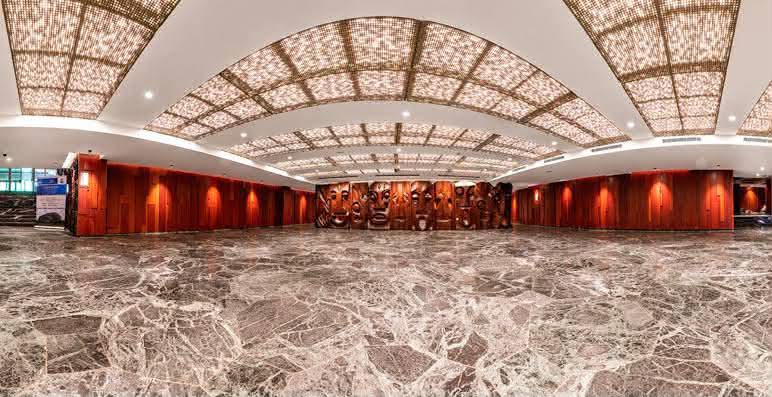
More than a year after the Federal Government officially unveiled the renovated National Theatre in Lagos, questions are emerging over the facility’s utilisation, management and contribution to Nigeria’s creative economy.
The Federal Government handed the complex to the Central Bank of Nigeria (CBN) and the Bankers’ Committee on July 12, 2020, for comprehensive renovation. In February 2021, the Federal Executive Council approved a ₦21 billion renovation proposal for the project.
The facility, renamed the Wole Soyinka Centre for Culture and the Creative Arts by President Bola Tinubu in July 2024, was officially inaugurated on October 1, 2025, as part of activities marking Nigeria’s 65th Independence Anniversary.
Despite the extensive renovation, industry stakeholders say the major challenge is no longer the building itself but how it is managed, programmed and integrated into the wider creative industry.
Biodun Abe, a former technical director of the National Theatre, explained that the original arrangement went beyond renovating the existing structure. It also envisaged developing approximately 44 hectares of surrounding land into an entertainment city dedicated to fashion, information technology, music and film.
According to him, both projects were expected to progress simultaneously, creating a comprehensive ecosystem capable of supporting Nigeria’s creative industries.
However, concerns remain over the extent to which the broader development plan has been realised.
Bureaucracy, High Costs Discourage Event Organisers
Although the renovated facility boasts impressive infrastructure, some event organisers have raised concerns about the administrative processes involved in securing bookings.
Seun Oloketuyi, founder of the Best of Nollywood Awards, described the building as impressive but said bureaucratic procedures, restrictive contractual conditions and delays in recovering refundable deposits made organising events at the venue unnecessarily difficult.
He also complained about restrictions on access for event preparations and limitations on programme hours, arguing that such conditions could discourage prospective clients.
Music executive Bizzle Osikoya identified the cost of hiring the facility as another major obstacle, particularly for emerging and mid-tier artistes who may struggle to meet the financial requirements.
He suggested that management consider more flexible arrangements, including revenue-sharing models, to make the venue accessible to a broader range of performers and promoters.
Poor Infrastructure Around the Theatre
Beyond the facility itself, creative industry stakeholder Jide Taiwo argued that the surrounding environment must also be developed to attract sustained commercial activity.
He cited poor roads, inadequate lighting and a shortage of complementary businesses as factors limiting the venue’s appeal to event organisers and audiences.
According to him, renovating the theatre without improving its immediate surroundings risks repeating the same cycle of decline that affected the landmark before its rehabilitation.
Calls for Year-Round Cultural Programming
Adeniran Makinde, president of the National Association of Nigerian Theatre Arts Practitioners, said the National Theatre should operate as a vibrant cultural institution rather than function primarily as an event centre waiting for bookings.
He advocated a consistent calendar of theatrical productions, festivals, exhibitions, concerts and other cultural activities to attract regular visitors and generate sustainable revenue.
Makinde argued that a structured programming strategy would help transform the complex into a thriving cultural and commercial hub.
Signs of Progress Amid Persistent Concerns
Despite the challenges, the theatre has recorded notable events since its reopening. Afrobeats star Adekunle Gold made history in December 2025 by selling out the venue, demonstrating its potential to host major entertainment productions.
Other high-profile performances have also been announced, raising hopes that the facility could attract more local and international events.
However, stakeholders maintain that isolated headline performances will not be enough to guarantee the theatre’s long-term success.
The central question remains whether the Federal Government and the facility’s management can address concerns over pricing, administrative procedures, surrounding infrastructure and cultural programming to ensure that the ₦21 billion investment delivers lasting benefits to Nigeria’s creative economy.
Related posts:
- ECN DG Urges Nigeria to Lead Africa’s Hydrogen Economy
- Petrol Price Hits N1,430 In Abuja As Strait Of Hormuz Crisis Worsens
- JUST IN: Tinubu Departs Paris For Nigeria After Sowore’s Claim Of Treatment In France
- NITDA Launches 2026 National Cybersecurity Awareness Month, Urges Nigerians To Strengthen Digital Safety
