
Share!
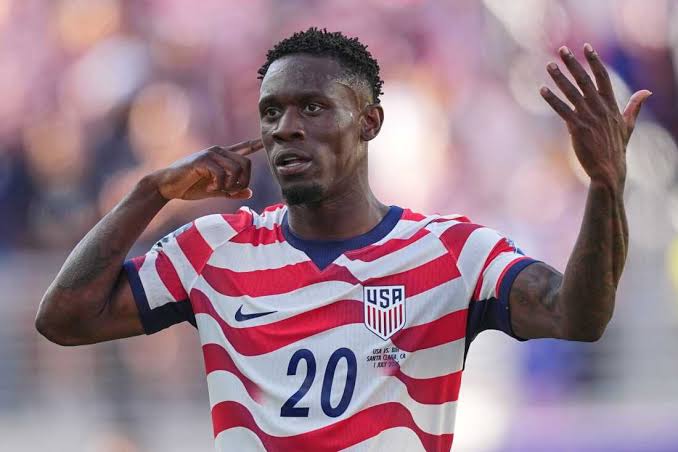
The Union of European Football Associations (UEFA) has strongly condemned FIFA’s decision to suspend the one-match ban imposed on United States striker Folarin Balogun, warning that the move threatens the integrity and credibility of world football.
Balogun was shown a straight red card during the United States’ Round of 32 victory over Bosnia and Herzegovina, a decision that ordinarily carries an automatic one-match suspension under FIFA regulations. However, FIFA later invoked Article 27 of its Disciplinary Code to defer the sanction for a one-year probationary period, making the forward eligible for his side’s Round of 16 clash against Belgium.
Reacting to the development, UEFA described the decision as “unprecedented, incomprehensible and unjustifiable,” insisting that automatic suspensions for red cards are a fundamental principle of the game and should not be altered during a major tournament.
The European football governing body warned that such a decision sets a dangerous precedent capable of undermining confidence in football’s disciplinary process and raising questions about equal treatment for players and teams.
The controversy intensified after reports emerged that U.S. President Donald Trump personally urged FIFA President Gianni Infantino to review Balogun’s dismissal before the governing body announced the suspension of the ban. Although FIFA maintained that its decision was made within the provisions of its disciplinary code, the timing of the intervention has fueled criticism and allegations of political influence.
Belgium’s Football Association has also expressed shock over the ruling and lodged an appeal, arguing that FIFA’s action contradicts its own competition regulations, which prescribe an automatic suspension following a red card.
Despite the growing backlash, FIFA has stood by its decision, meaning Balogun remains eligible to feature for the United States while serving a one-year probation. Any similar disciplinary offence within that period could see the suspended sanction reinstated alongside any fresh punishment.
The MeridianSpy reports that the incident has triggered one of the biggest governance controversies of the 2026 FIFA World Cup, with football stakeholders questioning whether political influence should have any role in disciplinary decisions that affect the fairness and integrity of the sport.
