
Share!
Tinubu Mocks Atiku’s Privatisation Record, Says he Tried to Privatise ADC
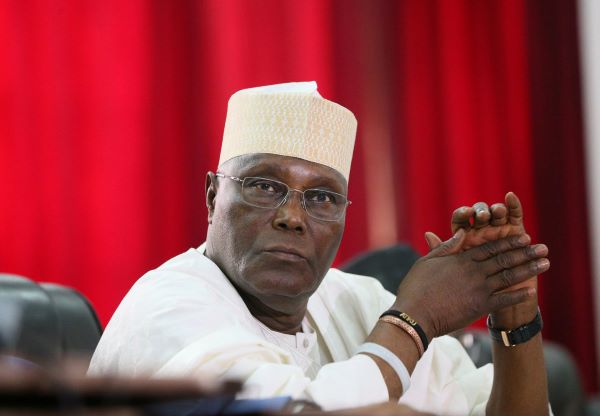
President Bola Tinubu has taken a swipe at former Vice President Atiku Abubakar, criticising his record on Nigeria’s privatisation programme and joking that he “even failed” in an alleged attempt to privatise the African Democratic Congress (ADC).
Tinubu made the remarks on Thursday in Abuja while addressing members of the Renewed Hope Ambassadors led by Governor Hope Uzodimma at the State House.
Without mentioning Atiku directly at first, the president said some opposition figures currently positioning themselves for the 2027 elections had previously managed key national economic reforms but failed to deliver meaningful results.
Atiku served as vice president between 1999 and 2007 under former President Olusegun Obasanjo and chaired the National Council on Privatisation during that period.
Tinubu argued that many state-owned enterprises privatised under the policy have since become non-functional or underperformed, questioning the effectiveness of the exercise.
He cited the steel sector, including the Delta Steel Company and Ajaokuta Steel Company in Kogi State, as examples of assets that failed to meet expectations after being concessioned or earmarked for privatisation.
“In this country, one of those now criticising had the opportunity to lead the privatisation council. Key national assets were sold, but today many of them are not working,” Tinubu said.
Taking a more direct jab, the president accused Atiku of attempting to “privatise” the ADC amid ongoing leadership disputes within the opposition party.
“The head was the chairman of the privatisation council of Nigeria. He privatised the steel industry in Delta; is it working today? He privatised Ajaokuta; is it working today? I can go on,” Tinubu said.
“They even tried to privatise another man’s political party, but the owner said no,” he added, drawing laughter from the audience.
The president linked the comment to the lingering crisis within the ADC, which has been engulfed in internal disputes since an opposition coalition moved to take over its leadership in 2025.
The party is currently divided into factions, with leadership tussles involving figures such as former Senate President David Mark, former deputy national chairman Nafiu Bala, and Ogga Kingsley.
The Independent National Electoral Commission (INEC) had earlier derecognised some factions following a court ruling, while the Supreme Court is expected to hear an appeal on the leadership dispute later this month.
In Adamawa State, a faction of the party also announced the suspension of Atiku, accusing him of fuelling disunity within its ranks.
Tinubu maintained that the privatisation programme, implemented through the Bureau of Public Enterprises, was designed to reduce government control, attract investment, and improve efficiency across sectors such as telecommunications, banking, energy, and manufacturing.
However, he insisted that the policy fell short of expectations, with several enterprises either defunct or struggling years after being transferred to private investors.
The president also reaffirmed his resolve ahead of the 2027 general elections, stating that he would not hand over power to opposition figures he described as having failed in previous responsibilities.
“I will not walk away from this responsibility. We will continue to build from the grassroots and consolidate our progress,” he said, urging supporters to intensify mobilisation nationwide.
No related posts.
