
Share!
When Dr. Abubakar Adamu Dabban assumed office as the Executive Secretary of the Agricultural Research Council of Nigeria (ARCN) on 11th June 2025, exactly on year ago, expectations were high. Nigeria’s agricultural sector was grappling with mounting food insecurity, climate-induced production challenges, weak research-extension linkages, inadequate funding, and institutional inefficiencies threatening the country’s food systems.
Twelve months later, stakeholders across the agricultural research ecosystem say the ARCN under Dr. Dabban has begun laying the foundation for a more coordinated, reform-driven, and impact-oriented agricultural research architecture aligned with Nigeria’s national food security priorities.
From institutional reforms and stakeholder engagement to renewed advocacy for staff welfare, research innovation, and strategic partnerships, the past year has marked a defining phase in the effort to reposition agricultural research as a central pillar of national development.
From the onset of his administration, Dabban made it clear that his leadership would prioritize continuity, institutional strengthening, and value addition rather than political distractions.
Speaking during his handing and taking over ceremony in Abuja shortly after his appointment , the ARCN boss emphasized the need for unity of purpose among management, staff, and stakeholders to move the Council forward.
He warned against sycophancy, encouraged professionalism among staff, and reassured workers that his administration was not established to witch-hunt anyone but to consolidate on past achievements while opening new frontiers for progress.
That early message would later evolve into a broader institutional reform agenda aimed at repositioning Nigeria’s agricultural research system to respond more effectively to contemporary realities.
One of the most significant milestones recorded within Dr. Dabban’s first year in office was the unveiling of a comprehensive reform agenda designed to strengthen agricultural research governance in Nigeria.
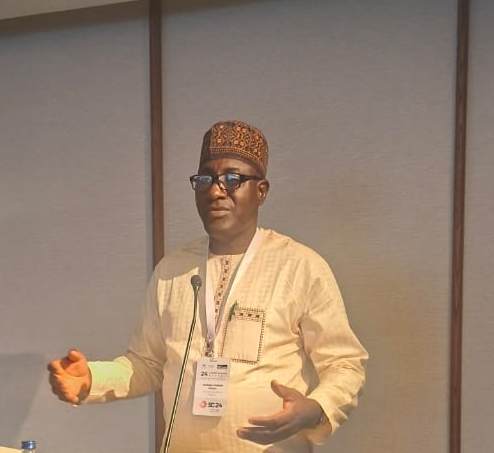
At the maiden National Stakeholders’ Forum on Agricultural Research Capabilities, held in Abuja on September 10, 2025, Dabban outlined four major priority reforms currently being pursued by the Council in collaboration with key stakeholders.
The reforms include the development of a second-generation strategic and operational plan for the Council, review of conditions and schemes of service for agricultural institutions, implementation of the ARCN (Amended) Act 2021, and the review of management guidelines which were last updated in 2009.
These reforms, according to stakeholders, represent one of the boldest attempts in recent years to modernize the governance framework of Nigeria’s agricultural research institutions.
By prioritizing institutional restructuring and policy implementation, the Council under Dabban is signaling a shift from routine administration to long-term systems transformation.
Industry experts believe the implementation of the amended ARCN Act alone could significantly improve accountability, coordination, and operational efficiency across Nigeria’s National Agricultural Research Institutes (NARIs) and Federal Colleges of Agriculture (FCAs).
At the heart of Dabban’s leadership philosophy is the conviction that agricultural research must directly support national food security objectives.
In line with the Renewed Hope Agenda of President Bola Ahmed Tinubu and the Federal Government’s declaration of emergency on food security, the ARCN leadership has consistently emphasized the strategic role of science, innovation, and technology in transforming agriculture.
During the National Stakeholders Forum on Agricultural Research Capabilities in Nigeria, organized in collaboration with the International Institute of Tropical Agriculture (IITA), Dr. Dabban stressed that Nigeria’s agriculture stands at a critical crossroads.
According to him, while the country faces serious threats from climate change, population growth, insecurity, and pressure on food systems, there are also enormous opportunities to leverage research and innovation to improve productivity and transform livelihoods.
He noted that over the years, Nigeria’s National Agricultural Research System has built substantial capabilities in human resources, technological innovation, infrastructure, collaborative networks, and knowledge dissemination.
However, he argued that sustaining and expanding these capabilities is essential if Nigeria hopes to achieve lasting agricultural transformation.
That position reflects a growing consensus among policymakers and experts that research institutions must move beyond theoretical outputs and focus more on practical solutions capable of improving farmers’ productivity, resilience, and incomes.
Another defining feature of Dabban’s first year has been his emphasis on collaboration and stakeholder engagement.
Under his leadership, the Council has intensified engagement with national and international research institutions, development partners, policymakers, colleges of agriculture, and farming communities.
The stakeholders’ forum itself represented a major platform for cross-sector dialogue, bringing together key actors including the Committee of Directors of Research Institutes (CODRI), the National Committee of Heads of Colleges of Agriculture and Related Disciplines (NACHCARD), and international development institutions.
Observers say the collaborative approach reflects an understanding that Nigeria’s agricultural challenges cannot be addressed in isolation.
While encouraging stronger partnerships, the ARCN leadership is attempting to bridge longstanding gaps between research institutions, extension systems, policymakers, and end users of research findings.
This alignment is particularly important as Nigeria seeks to improve food production, reduce import dependency, and strengthen climate resilience within the agricultural sector.
Beyond policy reforms, Dabban has also demonstrated commitment to improving institutional capacity and staff welfare within the agricultural research ecosystem.
During working visits to institutions including the Federal College of Freshwater Fisheries Technology, Baga, and the Lake Chad Research Institute on 19 October last year, he reaffirmed the Federal Government’s commitment to addressing challenges confronting agricultural research institutes and colleges.
He commended management and staff of the institutions for their resilience despite operational difficulties and charged them to intensify efforts in research, training, and extension services.
Importantly, the ARCN under his leadership has re-initiated the review of Conditions and Schemes of Service for NARIs and FCAs in collaboration with the Office of the Head of Civil Service of the Federation.
For many workers within the sector, this development represents a critical step toward improving motivation, professionalism, and institutional productivity.
Dabban also disclosed that the Council is engaging the Tertiary Education Trust Fund (TETFund) to ensure that the agricultural research subsector benefits more substantially from intervention funding.
Analysts say such interventions could help tackle persistent infrastructure deficits, improve laboratories and training facilities, and enhance the quality of research outputs across institutions.
As Nigeria continues to confront rising food prices, climate variability, insecurity, and demographic pressure, the importance of a functional agricultural research system has become increasingly evident.
In many ways, the success of Nigeria’s broader agricultural transformation agenda may depend heavily on the effectiveness of institutions responsible for generating innovations, technologies, improved seedlings, mechanization strategies, and adaptive research solutions.
One year after assuming office, Dr. Abubakar Adamu Dabban appears focused on creating the institutional framework required to make that possible.
While significant challenges remain — including funding constraints, weak extension systems, and slow policy implementation — stakeholders believe the direction taken by the current ARCN leadership has introduced renewed momentum within the sector.
The emphasis on reform, collaboration, institutional strengthening, and food security alignment suggests an administration attempting not merely to manage the system, but to reposition it for long-term national relevance.
As the Council enters another year under Dr. Dabban’s stewardship, expectations will likely shift from policy articulation to measurable implementation outcomes.
For many within Nigeria’s agricultural community, however, the first year has already provided an important signal — that agricultural research is gradually returning to the center of national development conversations.
Kabir Abdulsalam is a Public Affairs analyst and can be reached via kbabdulsalam03@gmail.com.
No related posts.
