
Share!
On Tuesday, August 4, 2026, Nigeria recorded a landmark achievement that will be remembered in the history of renewable energy development across Africa. In Osara, Kogi State, the Federal Government officially commissioned the Barefoot Renewable Energy College (BARECKS), a groundbreaking institution constructed by the Energy Commission of Nigeria (ECN) under the leadership of its Director-General and Chief Executive Officer, Dr. Mustapha Abdullahi. I was in Osara in person to witness the epocal event in its unveiling splendour and prestige. It was one experience that made me absolutely proud as a Nigerian.For proper context and understanding, a Barefoot College is an institution that trains people, often with little or no formal education. Its trainings are mostly in practical skill areas.
Historically, global Barefoot College movement began in India with the establishment of the original Barefoot College in Tilonia, Rajasthan, in 1972. As the model expanded internationally, Zanzibar, Tanzania became home to the Barefoot College International East and Central Africa Regional Training Centre in 2015. This was followed by Madagascar, where the Regional Training Centre officially opened in 2019. Senegal established the Barefoot College International West and Central Africa Regional Training Centre in 2020, while Guatemala launched the Barefoot College International Latin America Regional Training Centre in 2022. Fiji, an independent country in the South Pacific Ocean, followed with the Barefoot College Pacific Regional Training Centre in 2023.
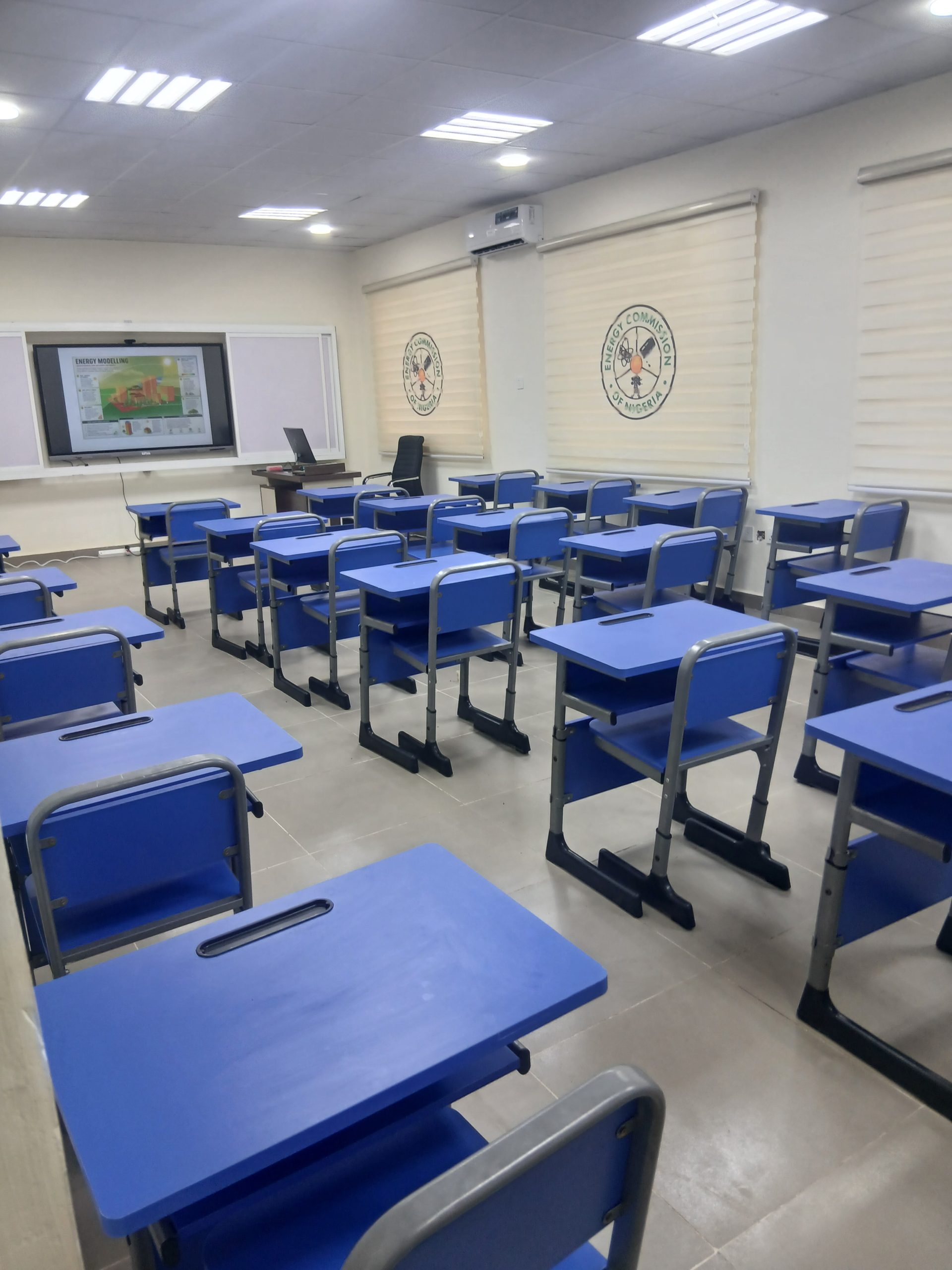
Nigeria’s first Barefoot College journey began in August 2024, when the foundation stone for the college was laid. Just two years later, that vision has become reality. A move that comes off as a testimonial to focused leadership, institutional commitment, and effective project execution.The college is equipped with modern facilities, smart classrooms, specialised laboratories, workshops, and practical training infrastructure designed to produce a new generation of skilled renewable energy technicians, innovators, and entrepreneurs. Beyond the impressive buildings lies a much bigger objective of empowering communities, expanding access to clean energy, creating jobs, and strengthening Nigeria’s transition to a sustainable energy future.
What Sets Nigeria’s Barefoot Renewable Energy College Apart
Nigeria’s Barefoot Renewable Energy College (BARECKS) stands out for several distinctive reasons. Firstly, it is Africa’s first government-established Barefoot Renewable Energy College. Unlike the regional Barefoot College International training centres in Tanzania (Zanzibar), Madagascar, and Senegal, BARECKS was conceived, funded, and constructed by the Federal Government of Nigeria through the Energy Commission of Nigeria (ECN).
Secondly, it is a specialised national institution dedicated exclusively to renewable energy skills development. The college provides practical training in solar photovoltaic systems, mini-grids, battery storage technologies, renewable energy installation and maintenance, as well as clean energy entrepreneurship, equipping Nigerians with industry-relevant technical skills. Thirdly, the institution directly supports Nigeria’s energy transition and rural electrification agenda. By producing a skilled workforce capable of deploying and maintaining renewable energy systems, BARECKS is expected to expand access to clean electricity, particularly in rural, underserved, and off-grid communities.
Furthermore, the establishment of the college strengthens Nigeria’s leadership position in Africa’s renewable energy landscape. By creating a permanent Barefoot renewable energy training institution, Nigeria has joined a select group of countries around the world with dedicated facilities focused on practical renewable energy education and capacity building. Finally, BARECKS comes off as an examplification of efficient project execution and purposeful leadership. Its completion within a period of two years fou and within just two years is remarkable demonstration of timely implementation and commitment to advancing Nigeria’s clean energy future by the Energy Commission of Nigeria (ECN).
This expository article would be at best incomplete without acknowledging the role of the Director-General of Energy Commission of Nigeria (ECN), Dr. Mustapha Abdullahi, who is the ultimate game changer in the history of the Commission since its inception in September 14, 1979.
In perspective, this achievement also spotlights the leadership philosophy of Dr. Abdullahi within the enclave of transformational leadership.Since assuming office as Director-General of the Energy Commission of Nigeria on 23 October, 2023, he has transformed the visibility and relevance of the Commission. Under his stewardship, the ECN has moved from relative obscurity to becoming one of the most active public institutions driving Nigeria’s clean energy agenda.
Before his appointment, many Nigerians scarcely knew that the Energy Commission of Nigeria existed. The Commission had a low public profile despite its strategic mandate. Today, that narrative has changed drastically. Through renewable energy interventions across tertiary institutions, implementation of national energy policies, strategic partnerships, solarisation projects, and transformative initiatives such as the Barefoot Renewable Energy College, the Commission has established itself as a key institution shaping Nigeria’s energy future.
The commissioning of BARECKS is therefore more than the inauguration of a new institution. It is a declaration that Nigeria intends not just to participate in the global energy transition, but to as well lead it across the African continent. It gives appropriate validation to the words of South African anti-apartheid revolutionary, political leader, Nelson Mandela, when he said: It always seems impossible until it’s done.”
It further crystalizes what is possible when visionary leadership is matched with purposeful execution, and it reinforces Energy Commission’s commitment towards a colourful and robust clean energy future for Nigeria. In the years ahead, August 4, 2026, may well be remembered not simply as the day a college was commissioned, but as the day Nigeria championed a new chapter in Africa’s renewable energy history with Energy Commission of Nigeria under Dr. Abdullahi at the centerpiece of events.
Sunny Ibeh Jnr,
Communication & Media Executive.
Abuja, Nigeria.
