
Share!
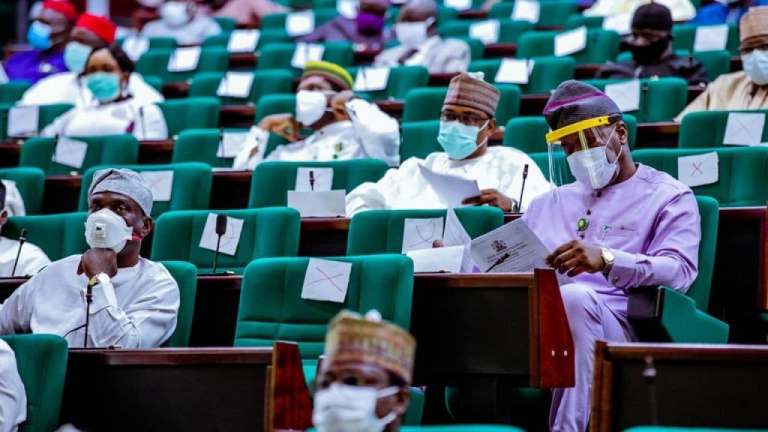
The House of Representatives has proposed alterations to the 1999 Constitution (as amended) to strengthen the State Independent Electoral Commission through stricter appointment criteria and expanded operational powers.
The proposals followed the adoption and consolidation of relevant constitution amendment bills by the House Committee on Constitution Review, chaired by the Deputy Speaker, Dr Benjamin Kalu.
With the National Assembly expected to resume plenary sittings on January 27, 2026, after the Christmas and New Year recess, lawmakers are scheduled to vote on the proposed amendments before the bills are transmitted to the 36 State Houses of Assembly for consideration, as required by the constitution.
Part of the proposed changes is an amendment to Section 200 of the Principal Act, which deals with the qualifications for membership of SIEC.
The House is seeking to introduce additional criteria beyond the existing provisions.
The amendment also seeks to address longstanding concerns about executive interference in the activities of SIECs.
While the existing constitutional framework vests state governors with significant influence over the commissions, the new proposal aims to insulate them from such control.
Accordingly, Section 204 of the amended bill introduces a proviso which states, “Provided that in the case of the State Independent Electoral Commission, its powers to make rules or otherwise regulate its procedure shall not be subject to the approval or control of the governor.”
In addition, the House is proposing to expand the powers of SIEC through amendments to the Third Schedule of the 1999 Constitution.
Currently, the Principal Act empowers SIEC to “organise, undertake and supervise all elections to local government councils within the state.”
The commission is also mandated to “Render such advice as it may consider necessary to the Independent National Electoral Commission on the compilation of and the register of voters in so far as that register is applicable to local government elections in the state,” in the extant law.
Under the proposed amendment, these responsibilities would be broadened. The revised Third Schedule grants SIECs the authority to “Conduct voter education, monitor party primaries and congresses and political campaigns as well as provide guidelines and regulations for campaigns.”
The commissions would also be empowered to “Conduct referendum required under the Constitution or any law of the state.”
Sunday PUNCH gathered that the proposed reforms come amid sustained agitation by civil society groups, election observers, opposition parties and constitutional scholars over the credibility of local government elections conducted by SIECs across the country.
For years, critics have argued that the commissions operate largely under the influence of state governors, resulting in elections that routinely produce landslide victories for the ruling parties at the state level and undermine grassroots democracy.
Concerns over the lack of independence of SIECs have also been reinforced by judicial pronouncements and reports by domestic and international observers, many of which have described local government polls in Nigeria as mere formalities rather than genuine democratic contests.
Calls for reform have increasingly focused on insulating SIECs from executive control, professionalising their operations, and aligning their powers more closely with those of the Independent National Electoral Commission.
The House intervention is seen as part of a broader effort to restore public confidence in the electoral process at the local government level and deepen democratic governance at the grassroots.
If approved by the National Assembly and the required number of state legislatures, the amendments would mark one of the most significant overhauls of the constitutional framework governing state electoral bodies since the return to civil rule in 1999
No related posts.
