
Share!
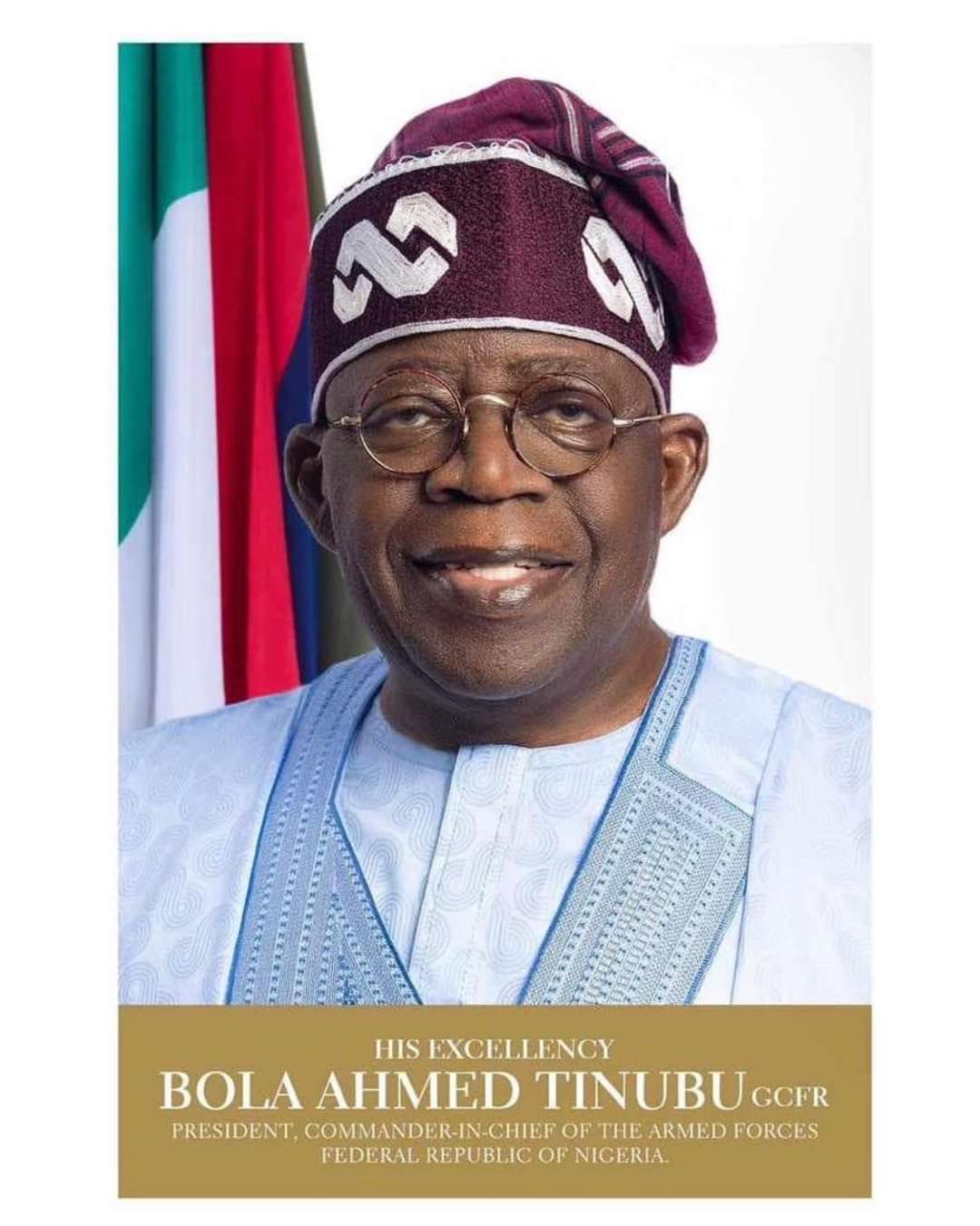
Dear Mr. President,
I must first congratulate you for becoming the President of Nigeria. Nigeria is faced with so many challenges. The problem facing Nigeria is not only that of reducing poverty, but also that of saving a chunk of humanity by creating the capacity to coalesce the most populous Black Country into the comity of developed nations.
Some might think Nigeria becoming a developed nation will not occur in the foreseeable future. The purpose of this letter is to assure the president that Nigeria could become a developed nation if only it applied the appropriate development model at its economic stage. Also, the country’s future cannot be charted by only one person or a few people. All Nigerians, especially those in the Diaspora, will have to participate either by relocating back to Nigeria or by contributing well-thought ideas from abroad.
In August 2016, I had the opportunity to interview with a University in Nigeria after numerous attempts to be on the ground in Nigeria or any part of Africa. I had an interview with the same university five years earlier but was not successful. I believed teaching and researching in Africa would afford me the opportunity to feel economics as taught, discussed, and practiced in Africa. The continent has been brutalized by all human qualities measured by economic indices. Thus, it becomes imperative for well-meaning people with flowing adrenaline to tackle the economic challenges in Africa.
During the interview, after the introduction and discussions about the position, the first question given to me by one of the interviewers was: “Is Nigeria in a recession?” Surprised, but confirmed my fears during my school years that African nations, at their stage of development, were practicing the wrong economics. Is Nigeria in a recession? I asked myself, when was Nigeria in an economic peak? We know from the introductory economics discussing business cycles that a nation must be producing at a peak, when resources, especially labor, are fully utilized and then cool off to a recession. Since independence, one cannot point to any period in the history of the country that everyone who wished to work was employed in Nigeria. Characterizing the situation in the country as a recession at any time in its history is flattering but deceptive. Also, it is tantamount to describing a passenger jetliner as descending and about to land when actually it is sitting in a terminal, still boarding, and not even on the runway. It was a misnomer to construe any period of Nigeria’s economy as a recession.
Yes, the Nigerian economy is akin to other economies in Africa that are still “boarding” a gigantic jetliner at their stage of economic development. Unfortunately, mainstream economics does not emphasize the boarding stage because it would be contradictory to the basic tenets of mainstream economic theories founded on the concept of “rational choice.” These theories are constructed on “what ought to be,” an “ideal situation,” and the benchmark of efficiency. Moreover, these theories comply with the political principles of freedom and liberty. However, the economic history of developed nations would reveal that “what ought to be,” or an “ideal situation” may not be practicable. Therefore, at this stage of Nigeria’s economic development, it is imperative to discuss workable models. Before then, I wish to discuss the second question posed during the interview with my potential employer in Nigeria’s academia.
The next question during the interview was less shocking: “Do you believe in money as an economic tool?” I pondered again. In a society with scanty transactions and speculative motives for money, how does money work? Yes, I believe in money; however, money works well depending on money demand, which is a function of transaction and speculative motives, aka, the financial market. There are no mortgage markets. Except for imports, there is no market for automobiles, no vast market for furniture and kitchen utensils, no market for repair men, and very few borrow to start a business. All the transactions are “cash and carry.”
Yes, the central bank buys and sells government securities, which is the major function of notable central banks of the world, but how many Nigerians, retirement funds, or foreign investors are holding Nigerian government securities? If there is a money market, only a handful of Nigerians participate because the majority of Nigerians remain in a deep subsistence life, let alone invest their wealth in government securities. In the early households, for example, the men were hunting, and the women were gathering; the households were independent of each other, and transactions were unnecessary. Thus, money was not needed. Subsistence life in Africa is one rung higher than the practices of early humans. Heavy transactions are necessary to make money meaningful. For money to have an impact on the gross domestic product (GDP), transactions far above the subsistence level will be needed.
Perhaps, my interviewer meant M1 (coins, currency plus checking accounts), and not M2. Even if he meant M1, the currency content of M1 in some countries is less than 50% of what is referred to as money in the economic sense. Besides, billions of the Nigerian currency, the Naira, were reportedly set ablaze for ritual purposes or buried in officials’ backyards and abandoned buildings because they were ill-gotten. In these scenarios, money defies its mnemonic role in society, because money is not in transactions and not in circulation.
Therefore, the two questions during my interview were intertwined. A recession is when economic activities or transactions slow down, not because the price of oil dropped to $20-$25 a barrel as it was in August 2016. Theoretically, when the price of an essential input such as oil drops, it is good for business, and it is a period of economic recovery for most nations of the world. If it was otherwise in Nigeria due to sole reliance on one global commodity, that was not a recession; it was a result of economic dysfunction. Thus, Nigeria is operating a counter-cyclical economy. In addition, money matters in a society because it facilitates transactions. When transactions are flat, based on the quantity theory and the velocity of money as discussed in the 1970s, money is neutral. Meaning it has no impact on output but only on prices. That is the experience in many African nations.
A passenger jetliner must board all its passengers in the terminal before departure. Nigeria and the rest of Africa seem to believe that they could skip the stage of economic onboarding, the development stage of making the economic man, the stage of democratizing the economy, the stage of mobilizing the people, and, best of all, the stage of creating an egalitarian society. People are more crucial elements of an economy than oil and gas. People consume, spend, engage in entrepreneurship, and make transactions. Oil and gas do not. Therefore, the first stage of economic development is to be inclusive and induce people into making transactions. This agrees with the development theory in evolutionary economics that economic development occurs through changes in the ‘habits of thought.’ Thus, economic development must be people focused.
For the new administration, it must not be business as usual and must realize Nigeria’s stage of economic development. Therefore at this onboarding stage, the federal, state and local governments need to collaborate and align the desires of the people with the development objectives of the nation. What are the desires of the people? Which goods are in the utility function of Nigerians? Utility is an economic jargon for satisfaction or pleasure.
To be less technical, I refer to utility function as the happiness function. What makes people happy in addition to food and clothing? They are standardized affordable homes, education, healthcare, and transportation. These are the lifetime ambitions of every household in the entire world to own and live in a home with inner plumbing. They also wish their children receive a good education, affordable healthcare, and subsidized public transportation. These could be produced by low-to-medium skilled workers that are abundant in Nigeria. Furthermore, affordable homes are, in the long-run, self-financed, and it does not require Forex. Therefore, in economics, it is self-contradictory that a nation has homes to build, roads to construct, education, healthcare, transportation, and safety to provide, yet a good percentage of youths are unemployed. There is a coordination problem.
Fortunately, the process of onboarding, making money matter, and moving people from subsistence life are related. These are supported by transactions or economic activities. Any federal government administration, in collaboration with the state and local governments, can taxi the Nigerian economy to the runway, and ready for takeoff. The outcome of the appropriate policy could result in 25-30% GDP growth in the first year if properly implemented, and the rate subsequently drops gradually as the economy approaches its potential production level––That is, producing on the production possibility frontier. Then, we are ready for capital accumulation, the second stage of economic development. Evidence in many developed countries began with providing these infrastructures (social capital), then financial and physical capital started flowing in.
Therefore, Mr. President, the purpose of this letter is for you to re-examine the existing development model of this country, whether it has outlived its purpose, and whether it is time, the country considered a different development approach2. An approach focused on the people rather than oil for Forex for elephant projects, many of which remain non-functional after 63 years. People are economic agents; they bear the burden of an economy, and they also ferry an economy through good and bad times.
Yours sincerely,
Enajite Enajero, Ph.D. Economics, B.Sc. Accounting is with African Association for Evolutionary Economics
