
Share!
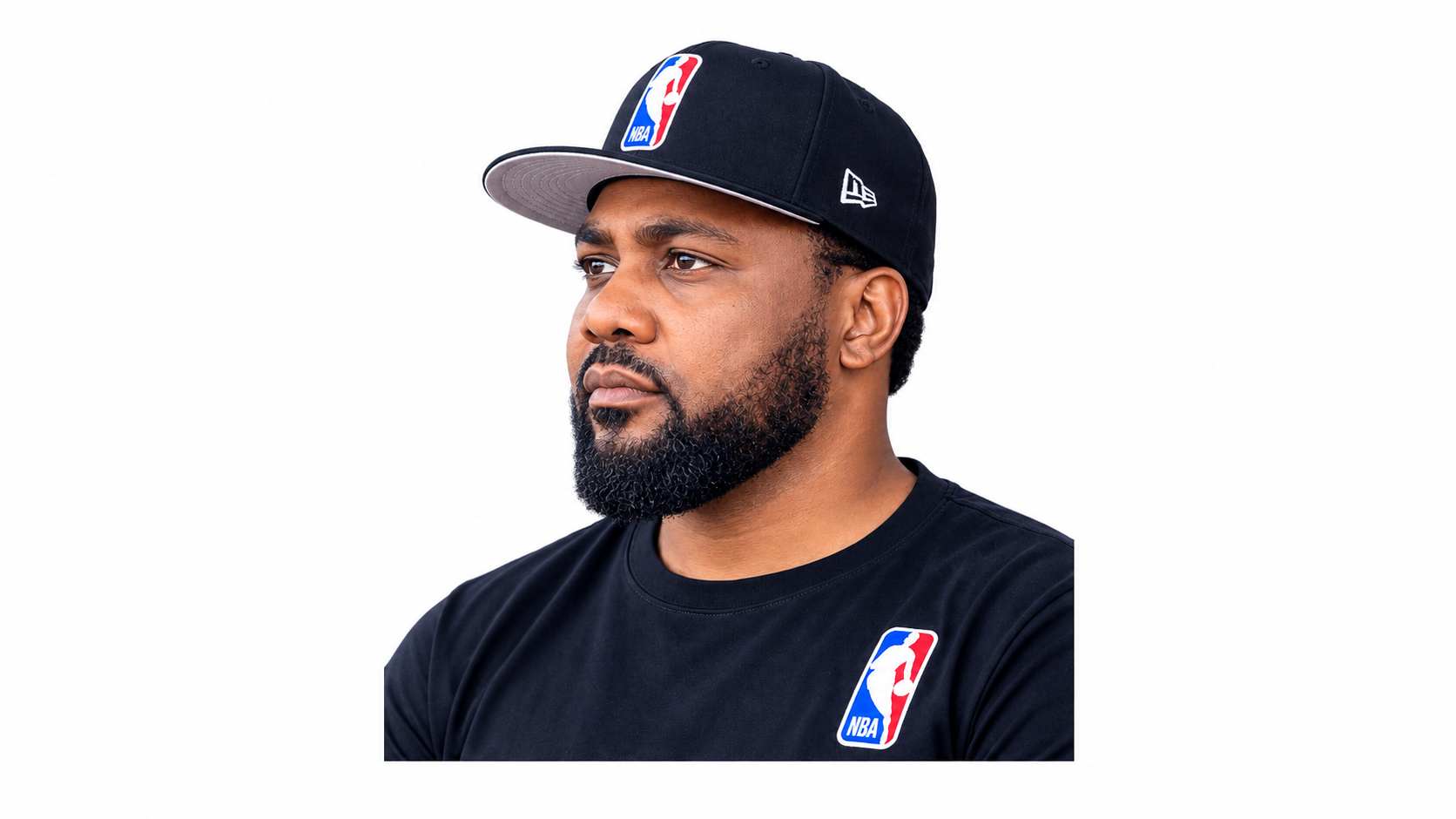
As the October 15, 2026 elective Congress of the Nigeria Basketball Federation (NBBF) approaches, the future of Nigerian basketball calls for leadership with capacity, experience and direction. Dr. Mustapha Abdullahi brings more than two decades of direct involvement in the game and experience on both sides of basketball. He has played at university, club, national and international levels, including the NBBF Premier League, National Division One League, NUGA competitions, the U18 National Basketball Team and Trafford Basketball Club in Manchester. Having lived the game as a player, he understands the realities of training, competition, travel, equipment, preparation and player welfare. He therefore approaches basketball not only as an administrator, but as someone who has experienced the demands of the court, dressing room and team environment.
That experience is evident in what he has built through the DAM Foundation. His work has covered grassroots development, infrastructure, talent identification, competition, sponsorship and welfare. The foundation’s basketball academy has grown to more than 500 children; its annual championship in Okene provides a competitive platform with meaningful rewards; teams have received sponsorship; officials have received support and training opportunities; and a basketball court has been constructed in Kano. His approach recognises that basketball development requires more than competitions. Players need equipment and preparation, officials need support, athletes deserve recognition for their efforts, and young people need pathways that can turn sporting ability into opportunity. His record demonstrates a willingness to put resources behind those principles.
Beyond basketball, Dr. Abdullahi has demonstrated leadership at institutional scale. As Director-General and CEO of the Energy Commission of Nigeria, he leads a federal institution, coordinates stakeholders and drives strategic programmes, including renewable-energy and solarisation initiatives involving public institutions, healthcare facilities, universities and other critical infrastructure. His career also includes service as Senior Technical Adviser to the former Minister of Innovation, Science and Technology, Chief Uche Nnaji; Special Adviser to the Kogi State Governor on Energy and Petroleum Resources, engineering and research roles, and advanced academic work in the United Kingdom. These experiences are relevant to the NBBF presidency, which requires institutional management, strategic planning, partnerships, fundraising, negotiation and international representation. Having represented Nigeria in international engagements, he also brings an understanding of how Nigerian institutions can build stronger relationships and visibility beyond the country.
There is also a generational dimension to his candidacy. Basketball is overwhelmingly driven by young people, and international basketball has shown that experienced younger leaders can successfully move from the court into federation administration. Andrei Kirilenko, a former Russian international and NBA player, became president of the Russian Basketball Federation at 34, while Jorge Garbajosa moved from elite basketball into federation leadership and later became President of FIBA Europe. The lesson is not that youth alone guarantees effective leadership, but that age should not exclude a prepared and experienced basketball professional. Abdullahi combines youthful energy with decades of basketball involvement and substantial institutional experience. His stated intention to consolidate existing gains, improve what works and introduce further development points to continuity with ambition rather than disruption.
Quite frankly, Dr. Abdullahi’s proposition is built around results, capacity and collective progress. His experience as a player, sponsor, grassroots developer, administrator, researcher and institutional leader gives him a broad understanding of the basketball ecosystem. As leadership scholar, Warren Bennis put it, “Leadership is the capacity to translate vision into reality.” That distinction is important: leadership is tested by what is built, improved and delivered. Dr. Abdullahi’s record provides tangible examples across institutional leadership, grassroots basketball, infrastructure, sponsorship, talent development and youth engagement.
As it stands, the NBBF needs stronger grassroots structures, quality courts and equipment, better player preparation, improved welfare, stronger coaches and officials, meaningful rewards, credible sponsorship and greater international exposure. In view of the above, the emergence of Dr. Abdullahi as the next NBBF President would bring more than a change of leadership; it would introduce a breath of fresh air, fresh ideas and fresh innovation from outside the federation’s traditional administrative cycle, while carrying the existing order along and building on its gains. It would represent a meeting point between experience and new thinking, proven capacity and fresh energy, with the potential to open a distinctly new chapter for Nigerian basketball, rewrite its history and build a stronger legacy for the greater good of humanity and posterity.
Sunny Ibeh Jnr, anipr, JP,
Media Executive, Strategic Communication Consultant and Public Affairs Analyst.
Related posts:
- Dr. Uchechukwu Sampson Ogah @56: A Sincere Reflection Beyond Words, By Sunny Ibeh Jnr, anipr
- Atiku’s New Campaign Rhetoric: The Power of Strategic Communication in Politics, By Sunny Ibeh Jnr
- Time for a New Playbook: Why Dr. Mustapha Abdullahi Should Lead the NBBF, By Etudaiye Suleiman Hassan
- Umunneochi, Gov Otti’s Visit And The Imperative Of Rebuilding Mmam Bridge, By Rommy Imah
