
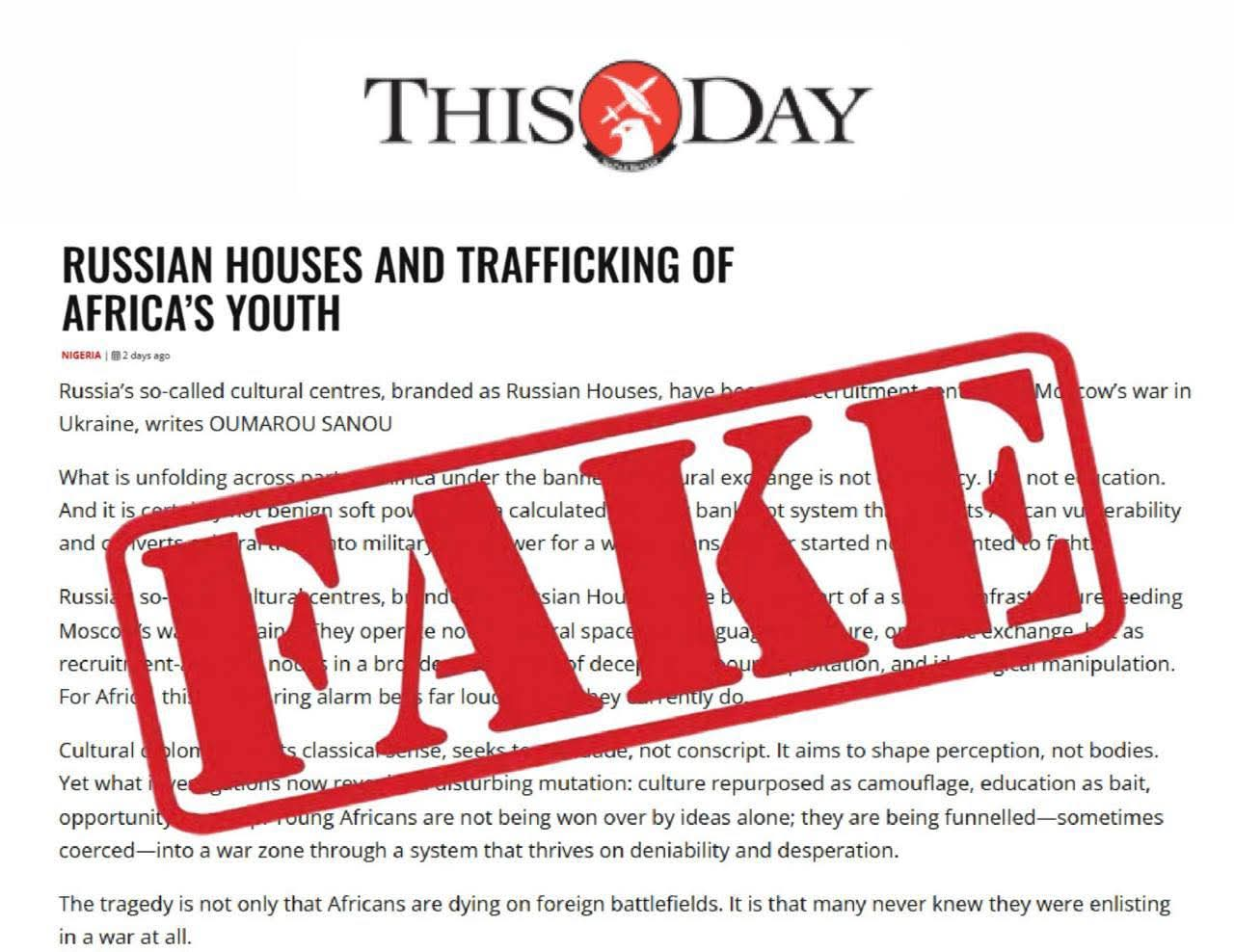
Is Russia Immune to Media Scrutiny in Africa?
•Press freedom, sovereignty and Africa’s refusal to be silence
By Oumarou Sanou
A dangerous precedent is emerging across Africa’s diplomatic and media landscape: the public targeting of individual journalists by foreign missions for simply asking difficult questions. The recent pattern of responses from the Russian Embassy in Nigeria toward African journalists and media platforms raises deeper concerns, not only about geopolitics but also about press freedom, sovereignty, and the dignity of African voices.
Bullying a single African journalist through official diplomatic channels is not merely a disagreement; it is an intolerable affront to free expression. Journalism exists to question power, whether domestic or foreign. When embassies shift from presenting facts to publicly discrediting individuals, the implication is clear: criticism will be punished personally rather than debated professionally. Today it is one journalist; tomorrow it could be an entire media ecosystem.
In recent months, respected outlets, including Premium Times, THISDAY, The Guardian Nigeria, and Leadership Newspaper, have faced unusually harsh diplomatic rebukes after publishing critical analyses. Prominent commentators such as Azu Ishiekwene and Richard Akinnola, as well as Oumarou Sanou, have also been singled out. Instead of counter-evidence, the response has often been personal accusations and insinuations of hidden sponsors. That approach undermines constructive dialogue and erodes trust in diplomatic engagement.
Let us be clear: journalists are human and can make mistakes. Professional reporting welcomes correction. If the facts are incorrect, present evidence, make the data open, and allow readers to judge. Insults, calumny and attempts to destroy professional reputations are not rebuttals; they are attempts to silence scrutiny. No foreign government should expect immunity from questioning on African soil.
Africa’s position in the evolving global order must remain principled and independent. Africans are not invested in the confrontation between Russia and the West; it is not our war. A genuine Pan-African perspective demands equal scrutiny of all external powers. If tomorrow credible evidence emerges that Britain, France, America, China or any other actor is recruiting Africans into foreign conflicts under deceptive pretence, the same criticism must apply. The principle is simple: African lives are not expendable tools in geopolitical struggles.
Reports of African nationals—including Nigerians—fighting and dying thousands of miles away in foreign wars raise serious ethical and security questions. Whether through informal networks, deceptive job offers, or shadow recruitment channels, African citizens are being drawn into conflicts that do not belong to them. Journalists who expose these risks are not attacking any nation; they are protecting their fellow Africans from exploitation and preventable tragedy.
Kenya’s recent stance offers a compelling example. Kenyan authorities publicly condemned the recruitment of their citizens into foreign conflicts and moved to close illegal agencies while seeking diplomatic explanations. That response signals a broader African awakening: governments must prioritise the safety and dignity of their citizens over the sensitivities of powerful partners. Nigeria and other African states would do well to adopt similar vigilance.
Beyond individual cases lies a deeper philosophical question. Neocolonialism today is not defined by flags or territorial control but by influence, dependency and narrative domination. Great powers—East or West—sometimes behave as though African voices must align with their geopolitical agendas. This assumption is unacceptable. Africans have their own interests, challenges and aspirations. We are not puppets in anyone’s strategic theatre.
Respect in diplomacy must be reciprocal. If a foreign embassy publicly attacked a journalist by name inside Moscow, Paris or Washington, would it be considered acceptable conduct? Sovereignty demands mutual respect, not selective outrage. African countries deserve the same diplomatic courtesy that global powers expect at home.
At the same time, African journalism must remain grounded in professionalism and evidence. Responsible reporting strengthens credibility and protects the integrity of public discourse. But professionalism cannot thrive in an atmosphere of intimidation. When journalists are targeted individually, the chilling effect extends far beyond the targeted individual; it discourages others from investigating sensitive issues of public concern.
The response from Africa’s media community must therefore be collective. Silence in the face of intimidation risks normalising it. Journalists, editors and civil society organisations should stand together to defend the right to ask difficult questions without fear of diplomatic retaliation. Protecting a single journalist ultimately concerns protecting the profession and safeguarding the democratic space.
Africa’s future in a multipolar world will depend on its ability to engage all partners while remaining fiercely independent. That independence begins with intellectual sovereignty: the freedom to question everyone and align with no external agenda. Whether criticism targets Russia, Western nations or any other power, the standard must remain consistent: facts over propaganda, dialogue over intimidation, and mutual respect over coercion.
No nation is above scrutiny. No African journalist should be silenced for doing the work that democracy demands.
Oumarou Sanou is a social critic, Pan-African observer and researcher focusing on governance, security, and political transitions in the Sahel. He writes on geopolitics, regional stability, and African leadership dynamics. Contact: sanououmarou386@gmail.com
