
Share!
Tinubu: Troops’ Sacrifice Bringing Lasting Peace to Troubled Regions
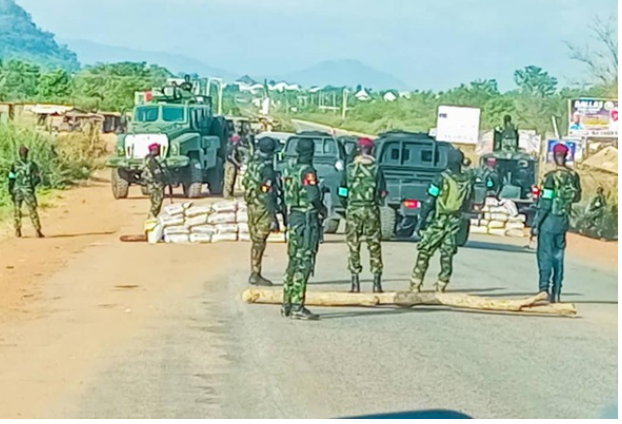
President Bola Ahmed Tinubu has said the sacrifices of Nigeria’s armed forces are restoring hope and stability in regions long ravaged by terrorism, banditry, and violent separatism.
In his Independence Day broadcast to Nigerians on Wednesday, the President paid glowing tribute to security personnel who, he said, continue to “pay the ultimate price so that millions of others may live in peace.”
“Our officers and men of the armed forces and other security agencies are working tirelessly and making significant sacrifices to keep us safe. They are winning the war against terrorism, banditry, and other violent crimes,” Tinubu said.
He noted that “peace has returned to hundreds of our liberated communities in the North-East and North-West, and thousands of our people have returned safely to their homes.”
For residents of Borno and Zamfara, where communities are gradually reopening, the President’s words resonated with a sense of relief. Amina Haruna, a mother of four who resettled in Gwoza after years in an internally displaced persons’ (IDP) camp, told Meridian Spy that the return of soldiers had given families courage to go back.
“Life is not the same as before, but at least we can sleep without fear of gunmen every night,” she said.
Security experts also underline the importance of the human cost behind the gains. “We often measure progress in territory reclaimed or roads reopened,” said Colonel Ibrahim Danjuma (rtd), a defence analyst. “But the true cost is in the lives of soldiers and officers who don’t make it back. Their sacrifices are what give displaced families a chance to restart their lives.”
Tinubu acknowledged these losses in his speech, pledging improved welfare for security personnel and their families. “We must continue to celebrate their gallantry and salute their courage on behalf of a grateful nation,” he said.
While critics caution that insecurity persists in parts of the North-West and North-Central, the government maintains that its integrated approach—military pressure, community engagement, and socio-economic investment—is gradually yielding a “lasting peace.”
For now, many Nigerians remain hopeful. In Katsina, Ibrahim Lawal, a farmer who recently returned to his village after being displaced for two years, put it simply: “The soldiers gave us back our land. Now we pray the peace will stay.”
