
Share!
The National Information Technology Development Agency (NITDA) has called on Nigeria to strengthen indigenous technology development and invest in responsible innovation, saying home-grown solutions are essential to building public trust in an increasingly artificial intelligence-driven world.
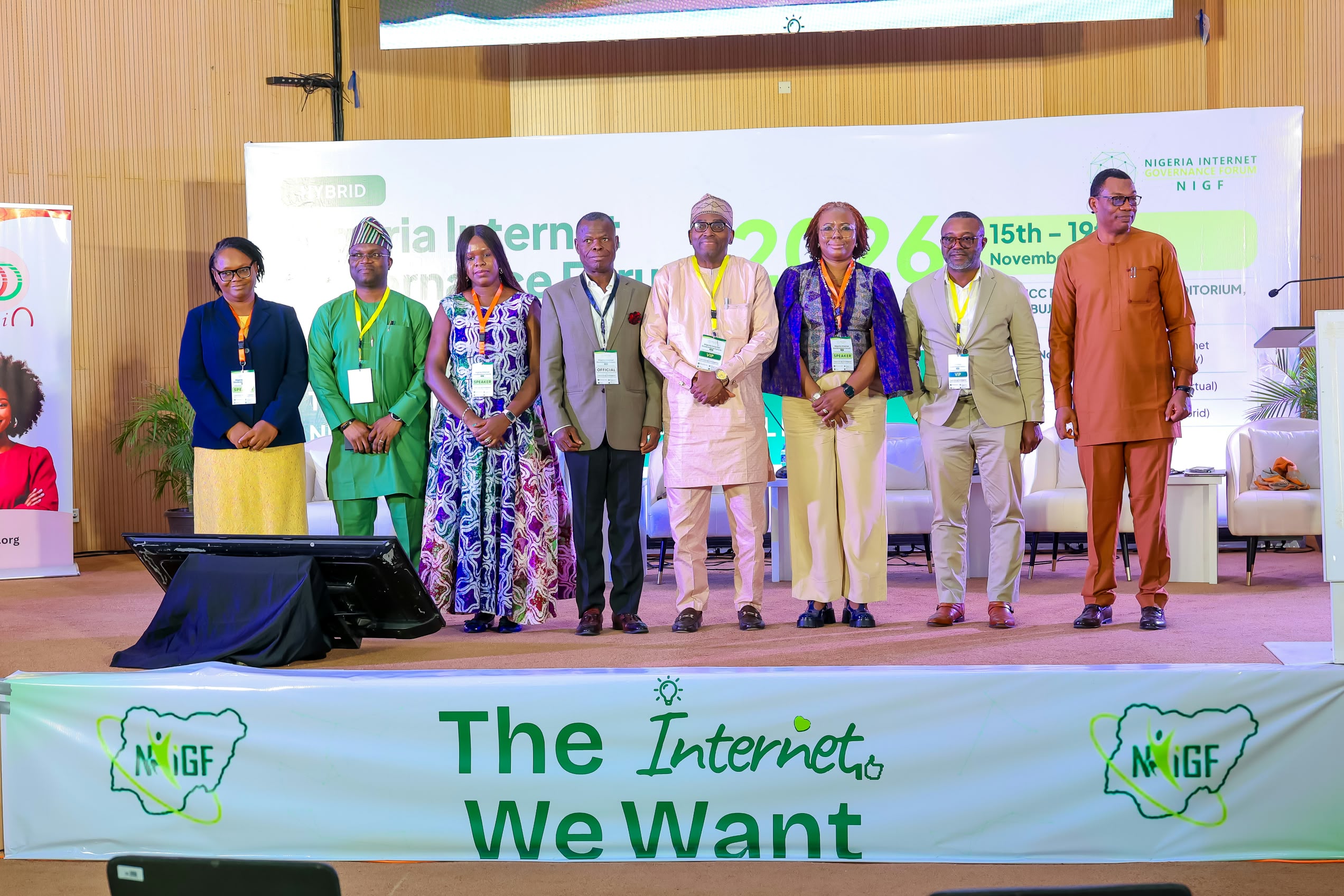
The Director-General of NITDA, Kashifu Inuwa Abdullahi, CCIE, made the call in a goodwill message delivered on his behalf by the Director of the Agency’s e-Government Department, Engr. Salisu Kaka, at the opening of the 2026 Nigeria Internet Governance Forum (NIGF) in Abuja on Thursday.
Speaking on the theme, *“Trust in the Age of Intelligence: Nigeria’s Shared Stake in a Digital Future,”* Inuwa said the rapid integration of artificial intelligence and other data-driven technologies into everyday activities had made trust, accountability and responsible deployment increasingly important.
He observed that technological advancement was gradually shifting the management of human affairs from direct human involvement towards what he described as “algorithm management,” raising concerns about the extent of control individuals have over digital systems and the decisions they influence.
The NITDA chief particularly warned about the risks associated with inaccurate artificial intelligence-generated responses, commonly referred to as AI hallucinations, noting that misleading outputs could have serious consequences for individuals and society.
He maintained that public trust should not be assumed to come automatically with technological advancement but must be deliberately incorporated into the design, development and deployment of digital solutions.
According to him, technologies introduced into society must prioritise public confidence, user safety and the needs of citizens rather than compel people to adjust their expectations and interests to suit systems developed elsewhere.
Inuwa identified indigenous technology development as a critical pathway towards building a digital ecosystem that reflects Nigeria’s realities, addresses its development priorities and inspires confidence among citizens.
He therefore urged stakeholders, particularly government and the private sector, to move beyond dependence on existing foreign technologies and take deliberate steps towards developing solutions that respond to the country’s specific needs.
“We have to be deliberate in making investments to ensure that we have the right technology for us to live digitally. Let the technology align with our own expectations, our own requirements, not the other way around. Governments need to create a conducive environment to allow us to develop indigenous innovation,” he said.
He further stressed that Nigeria must take an active role in determining the direction of its technological development by creating an enabling environment for local innovation and strategic investments.
Earlier, the Chairman of the NIGF Multi-Stakeholder Advisory Group, Dr. Dimie Wariowei, called on Nigerian stakeholders to take greater responsibility for shaping the country’s digital future through active participation in internet governance discussions.
Wariowei explained that the multi-stakeholder approach adopted by the forum provides an inclusive platform for government institutions, industry players, civil society organisations, technical experts and young people to contribute to internet policy discussions and consensus-building.
He described the NIGF as an important part of the broader internet governance structure, linking national discussions to the West Africa Internet Governance Forum, the Africa Internet Governance Forum and the global Internet Governance Forum.
He urged participants to approach the engagement with commitment, noting that recommendations and positions developed at the national level could strengthen Nigeria’s representation in regional and international digital policy discussions.
With the global Internet Governance Forum scheduled to hold in Nairobi, Kenya, from December 14 to 18, 2026, Wariowei said the outcomes of the Abuja meeting could contribute to wider continental and global conversations on internet governance.
The 2026 forum is examining opportunities and challenges associated with artificial intelligence and other emerging technologies, with discussions centred on three priority areas: fintech and cybersecurity, child online safety, and digital cooperation.
Participants are expected to explore practical approaches to strengthening digital trust, improving online safety and promoting inclusive cooperation as Nigeria continues to expand its digital economy.
Related posts:
- COP30 Kicks Off in Brazil with Urgent Call for Climate Action and Increased Financing
- State Police: Nigeria Must Choose Between Reform and Rising Insecurity — Jude Imagwe
- Six Years After: Publisher and Media Executive, Sunny Ibeh Jnr, Pays Tribute to Late Mentor
- ECN DG Urges Nigeria to Lead Africa’s Hydrogen Economy
