
Share!
The National Information Technology Development Agency (NITDA) and the Defence Intelligence Agency (DIA) are exploring a strategic partnership to develop indigenous defence technologies, strengthen intelligence operations and enhance Nigeria’s national security capabilities.
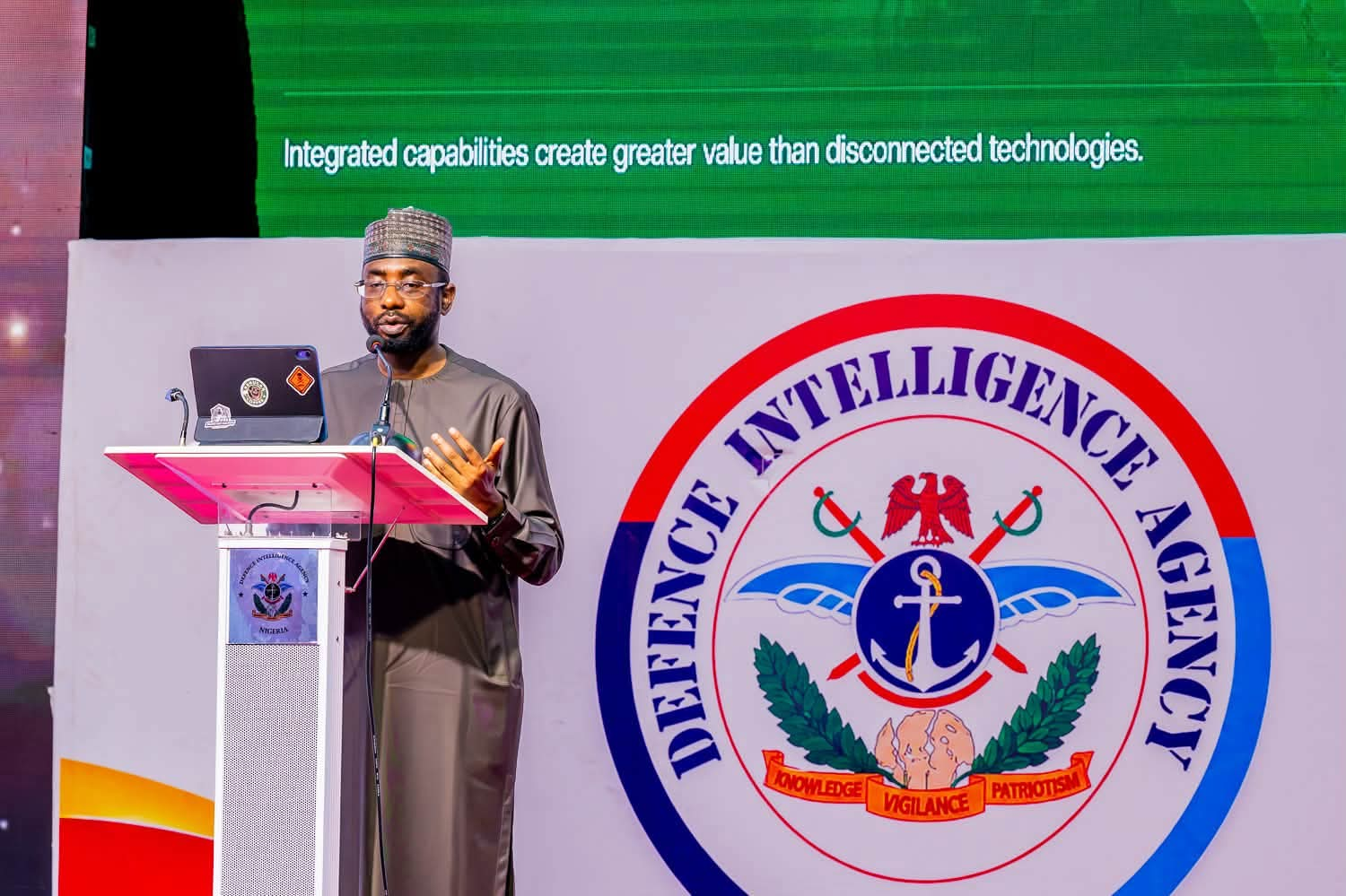
The Director-General of NITDA, Kashifu Inuwa, CCIE, disclosed this while delivering a keynote address at the Chief of Defence Intelligence Annual Conference 2026 in Abuja, where he called for stronger collaboration between the country’s technology ecosystem and the defence sector to address emerging security challenges.
Speaking on the theme, “Optimising Nigeria’s Intelligence Enterprise through Technological Innovation and Strategic Partnership in a Complex Security Environment,” Inuwa stressed the need for Nigeria to leverage its growing pool of technology professionals, startups and research institutions to develop homegrown solutions and reduce dependence on foreign technology.
He noted that emerging technologies, including artificial intelligence (AI), autonomous systems, data analytics and interconnected digital infrastructure, were transforming intelligence gathering and modern warfare, creating opportunities for security agencies to improve surveillance, threat detection and operational efficiency.
The NITDA boss also underscored the strategic importance of data ownership and digital sovereignty, warning that countries without adequate control over their data, communication infrastructure and digital platforms risk exposing sensitive national interests to external influence.
According to him, Nigeria must strengthen its data governance frameworks, cybersecurity infrastructure and digital capabilities to safeguard its national security interests.
On artificial intelligence, Inuwa described the technology as a critical tool for improving intelligence operations, particularly when integrated with satellite information, sensors and autonomous systems. However, he emphasised that human expertise, accountability and responsible governance must remain central to its deployment.
He advocated a shift from conventional defence procurement practices towards a model that prioritises local research, innovation and technology development, urging defence institutions to identify operational challenges and engage indigenous innovators to develop solutions tailored to Nigeria’s security needs.
As part of efforts to translate the proposal into practical outcomes, Inuwa proposed a strategic collaboration between NITDA and the defence sector to organise innovation challenges in artificial intelligence, autonomous systems and cybersecurity.
Under the proposed arrangement, security challenges would be presented to Nigerian technology startups and innovators, with their solutions subjected to technical assessment, testing and evaluation for possible adoption by relevant defence institutions.
He further identified data governance, secure digital infrastructure, cybersecurity frameworks, interoperability standards and specialised human capacity development as essential foundations for building a sustainable indigenous defence technology ecosystem.
Inuwa reaffirmed NITDA’s readiness to support the initiative through policy development, capacity building, research, standards and strategic partnerships, expressing optimism that the proposed collaboration would progress from discussions to practical implementation ahead of the next conference.
The Chief of Defence Intelligence Annual Conference 2026 brought together senior government officials, Service Chiefs, Nigerian Defence Advisers accredited to 91 countries, DIA regional directors, state coordinators and foreign defence advisers to deliberate on emerging security trends and innovative approaches to strengthening Nigeria’s intelligence and defence capabilities.
