
Share!
FG Proposes N102.3billion for Lagos Green Line Rail
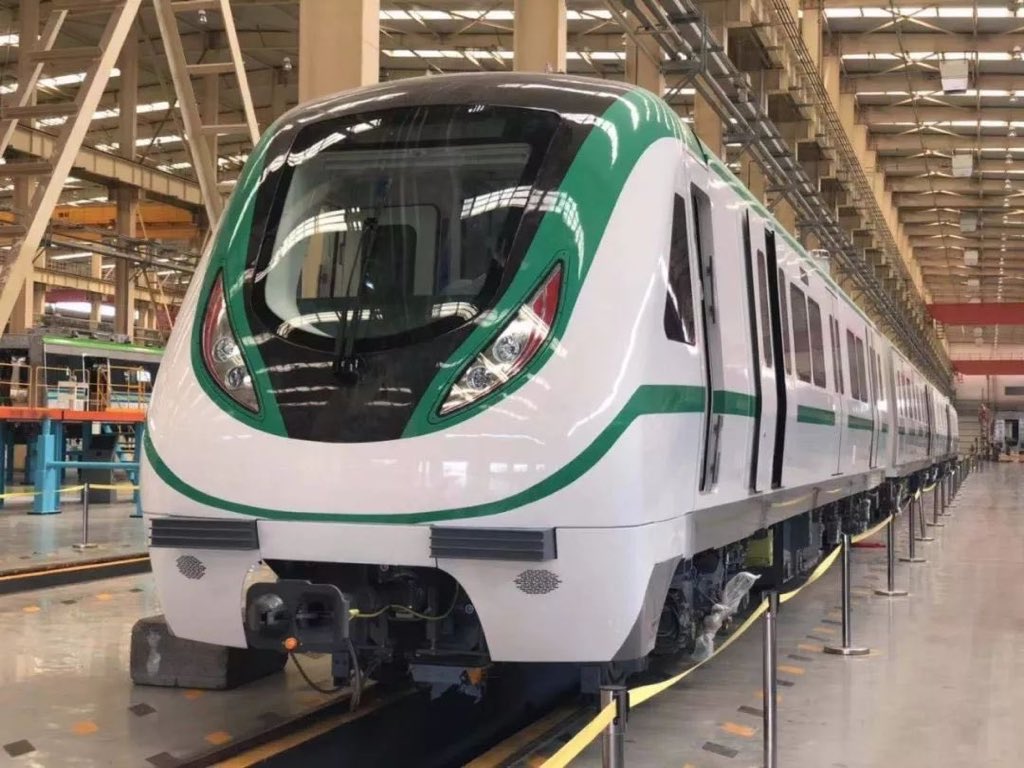
The Green Line is a 68-kilometre rail network designed to connect the Lekki Free Zone to Marina
The Federal Government of Nigeria has proposed an allocation of ₦102.3 billion as counterpart funding for the Lagos Green Line rail project in the 2026 fiscal year. This proposal, detailed in the 2026 Appropriation Bill under the Ministry of Transportation, signals continued federal support for the expansion of Lagos State’s rail infrastructure. The Green Line is a 68-kilometre rail network designed to connect the Lekki Free Zone to Marina, traversing high-traffic hubs including Victoria Island, Lekki, and Ajah.
Financial Framework and Multi-Agency Participation
The ₦102.3 billion earmarked for 2026 follows a previous allocation of ₦146.14 billion in the 2025 budget proposal, indicating a sustained, though adjusted, commitment to the project’s financing. According to the budget documents, these funds are to be transferred to the Ministry of Finance Incorporated (MOFI). As the custodian of federal equity and structured financing, MOFI is tasked with managing the government’s participation in major infrastructure projects alongside the Lagos State Government and private financiers.
Beyond the Green Line, the 2026 budget reveals additional transport consultancy investments. The government plans to spend ₦68.5 billion on consultancy services for several high-priority corridors, including:
The Lekki–Ijebu Ode–Ore–Kajola railway line.
The coastal railway corridor linking Badagry, Apapa, and Tin Can.
National Railway Modernisation and Security
The 2026 Appropriation Bill also provides ₦29.04 billion for broader railway modernisation efforts. These funds are designated for the completion and rehabilitation of critical national corridors, including the Abuja–Kaduna railway and the Lagos–Ibadan rail line.
Key technical and infrastructural provisions within this allocation include:
Station Development: Construction of 12 station buildings and track-laying works at Agbor.
Rolling Stock: Design, manufacture, and installation of new rolling stock, alongside maintenance equipment and spare parts.
Safety and Security: Implementation of signalling and telecommunications systems on the Itakpe–Ajaokuta–Warri line, and the deployment of acoustic sensing security surveillance on the Abuja–Kaduna corridor.
Future Planning: Feasibility studies for new standard-gauge lines and the engagement of transaction advisers for the concession of the Abuja–Baro–Itakpe and Kano–Maradi rail projects.
The Lagos Green Line is a flagship $3 billion metro project intended to transform urban mobility in Nigeria’s commercial capital. The 70-kilometre network will feature 17 stations, utilizing a combination of elevated and at-grade tracks.
Technically, the line is expected to operate eight-car B-type train sets capable of reaching speeds of 100 km/h. With a minimum headway of three minutes, the system is projected to carry 35,000 passengers per hour in each direction. While construction was initially slated to begin in late 2025, the 2026 budget allocation confirms that the federal and state governments are currently finalising the implementation and funding structures
The inclusion of these allocations in the 2026 budget reflects the Federal Government’s strategy to bridge infrastructure gaps through structured counterpart funding. By connecting the Lekki Free Trade Zone to the Marina central business district, the Green Line aims to reduce traffic congestion significantly along the Lekki-Epe corridor and enhance the economic output of the region.
As the 2026 Appropriation Bill moves through the legislative process, the focus for investors and policymakers will remain on the timely release of funds and the commencement of physical construction on the Lagos metro’s most ambitious corridor to date
No related posts.
