
Share!
ANALYSIS: US Airstrikes, Counterterrorism and Nigeria’s Sovereignty
By Kabir Abdulsalam
When news broke on Christmas Day that United States forces had carried out airstrikes against terrorist camps in Sokoto State, many Nigerians were caught between relief and unease. Relief, because the targeted group identified as ISIS-linked Lakurawa terrorists has, by multiple accounts, unleashed violence on rural communities across parts of Sokoto, Kebbi, Kwara, and along the Niger border since 2024.
Unease, because the idea of a foreign power launching missiles on Nigerian soil touches an old, sensitive nerve: sovereignty.
Arguably, the debate now is not whether terrorists deserve to be confronted, they do but how such force is deployed, who authorises it, and how the Nigerian state communicates its role to its own citizens.
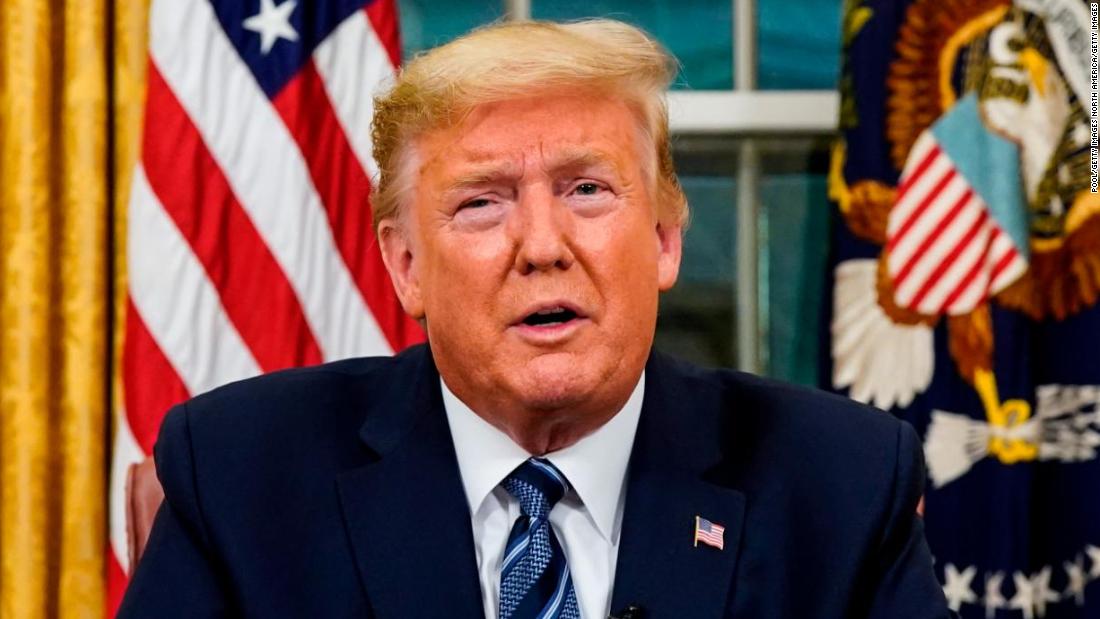
President Donald Trump wasted little time in owning the operation. In a fiery post on Truth Social, he announced that the United States had launched “powerful and deadly strikes” against ISIS terrorists in northwestern Nigeria, framing the action as part of his long-standing vow to confront Islamist militants, particularly those killing Christians.
US Africa Command later confirmed that Tomahawk cruise missiles were fired from a US Navy destroyer, reportedly the USS Paul Ignatius, targeting two terrorist camps near the Nigeria–Niger border in Sokoto State.
For Nigerians, however, the key question was not Trump’s bravado but Nigeria government’s voice or the initial lack of it. It took hours before Nigerian officials spoke publicly, creating a vacuum quickly filled by speculation, conspiracy theories, and nationalist outrage.
Eventually, the Federal Government clarified that the operation was conducted “in coordination with Nigerian authorities,” with intelligence provided by Nigeria’s armed forces. Later, the Foreign Affairs Minister Yusuf Tuggar framed the strike as a joint effort that had been “in the works for quite some time,” while emphasising that it was aimed at terrorists, not a religious group.
Similarly, the US Defence Secretary Pete Hegseth reinforced this narrative, thanking Nigeria for its cooperation and hinting at possible future actions.
Yet, even with these assurances, some Nigerians felt discomfort. This was, after all, the first known instance since independence in 1960 that a foreign military openly carried out airstrikes on Nigerian territory. For many citizens, symbolism matters as much as substance.
To place the incident in context, it is important to note that Nigeria’s security cooperation with foreign partners is neither new nor clandestine. Nigeria is a member of the Global Coalition to Defeat ISIS, the Trans-Sahara Counterterrorism Partnership, the African Crisis Response Initiative, and other multilateral security frameworks dating back to the early 2000s. The US–Nigeria Binational Commission, revived in recent years, provides a formal platform for defence and intelligence cooperation, co-chaired by Nigeria’s Foreign Minister and the US Secretary of State.
Under these arrangements, intelligence sharing, joint training, and even coordinated operations are not extraordinary. What is extraordinary is how poorly such realities are explained to the Nigerian public when flashpoint events occur.
Defence information management is not the same as routine political communication. It operates on layered principles: the right to know, the right to withhold, and the right to disclose selectively. Precision strikes involve complex variables—coordinates, projectile trajectories, fuel jettison, and secondary impacts. Without careful briefing, civilians naturally assume the worst, especially when reports emerge of shrapnel landing far from target zones, as was reported in parts of Offa, Kwara State, hundreds of kilometres away from Sokoto.
This is where Nigeria’s institutions faltered. Rather than proactively guiding public understanding, officials reacted defensively. Multiple voices spoke at different times, leaving citizens unsure whether Nigeria was leading, consenting, or merely accommodating.
Critics also questioned why Sokoto was chosen when terrorist violence has ravaged Zamfara, Borno, Katsina, and parts of the North-East for over a decade. The answer lies partly in threat evolution.
Before now, Lakurawa group were linked to ISIS networks and believed to have crossed from Niger Republic had established camps in the mountainous forests of Tangaza and Tambuwal LGAs, using them as staging grounds for cross-border attacks. Local officials and residents confirmed sightings of militants fleeing after the strikes, suggesting some operational impact.
Still, the optics are awkward. Nigerians remember that during the Jonathan administration, Nigeria openly invited Chadian and Nigerien forces from their soil to assist in fighting Boko Haram, particularly ahead of the 2015 elections. Although the intervention attracted several controversies. Similarly, under President Muhammadu Buhari, the United States sold Super Tucano aircraft to Nigeria, albeit with strict conditions on usage and human rights compliance.
Cooperation, in other words, has always worked best when it is transparent.
International law further buttress the matter. The UN Charter jealously guards state sovereignty, permitting external military action only with consent, self-defence, or under doctrines such as Responsibility to Protect. Nigerian officials insist consent was given. But consent that is poorly communicated can appear indistinguishable from unilateralism.
This explains why some Nigerians bristled at Trump’s tone, even while welcoming the attack against terrorists. A strike framed primarily as an American moral crusade—rather than a jointly agreed security operation—risks undermining Nigeria’s agency in the eyes of its own people.
Meanwhile, on the ground assessments of the strike’s effectiveness remain mixed. reports from media and other security sources described the operation as a “huge success,” particularly in terrorist-held mountainous areas. Local government officials in Tangaza confirmed strikes on camps, though casualty figures remain undisclosed. The absence of released footage or detailed battle damage assessments has fuelled scepticism, even as communities continue to report unusual militant movements.
What is not in doubt is that civilians in parts of Sokoto, Kwara, and nearby areas have lived under the shadow of terrorist violence for too long. Lakurawa attacks, kidnappings, and raids have devastated livelihoods and displaced families. If the airstrikes degrade the group’s capacity, many residents will quietly welcome them, regardless of the flags painted on the missiles.
The deeper lesson, however, goes beyond this single operation. Nigeria’s security crisis has persisted for over 15 years, claiming tens of thousands of lives and displacing millions. Each external intervention—whether Chadian troops in 2015 or US missiles in 2025—is a reminder of internal limitations. Foreign firepower can disrupt, but it cannot substitute for sustained political will, institutional reform, and local legitimacy.
The Sokoto airstrikes therefore present both a warning and an opportunity. A warning that sovereignty, once blurred, is difficult to reassert rhetorically. And an opportunity for Nigeria’s leadership to reset how it manages security communication honestly, promptly, and with respect for public intelligence.
Counterterrorism partnerships are not inherently problematic. Unilateralism is. In future operations, Nigerians deserve to hear first from Abuja, not Washington. Not because America is unwelcome, but because a sovereign state must always speak for itself.
Kabir Abdulsalam writes from Abuja, can be reach via: kbabdulsalam03@gmail.com
No related posts.
