
TMS Hits 61,000 Members, Unveils National Secretariat, Plans Tinubu Presidential Library
The Tinubu Movement for Sustainable Governance Foundation (TMS), popularly known as Tinubu Must Stay, has announced that its membership has surpassed 61,000 Nigerians within seven weeks of its establishment, with a significant majority comprising young people as it admit more political groups to its fold.
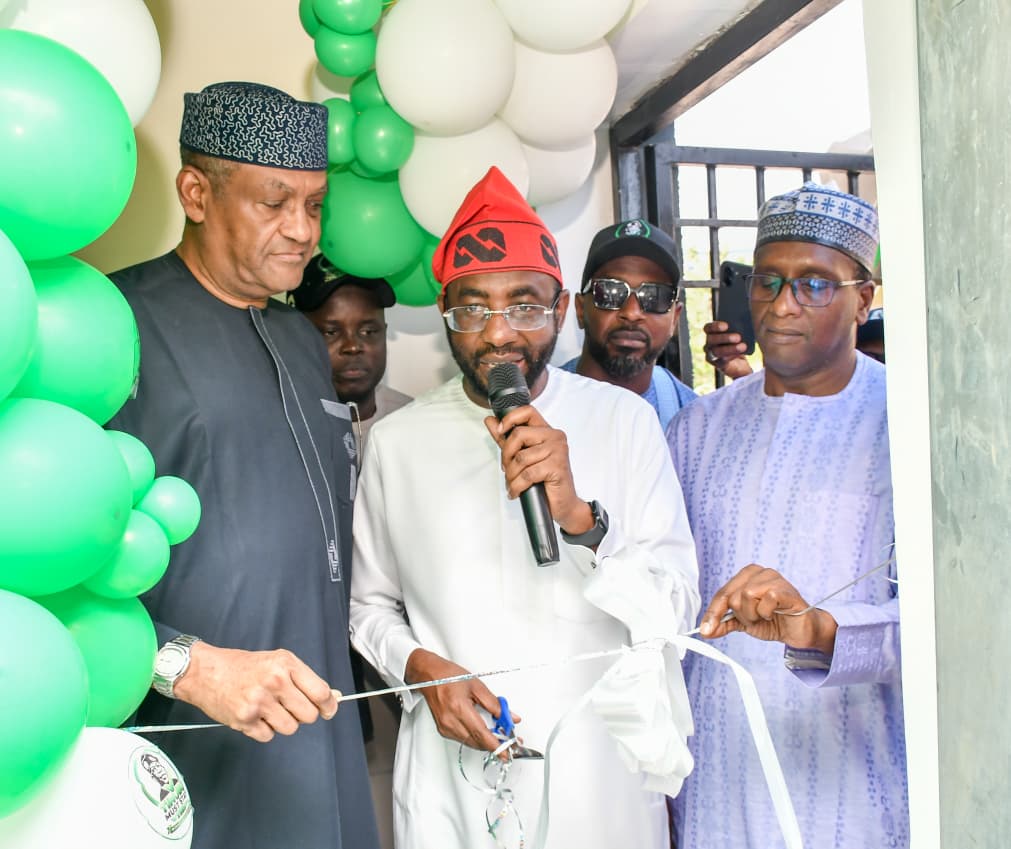
The Founder, Chairman of the Board of Trustees and National Coordinator of TMS, Malam Kashifu Inuwa Abdullahi, disclosed this on Friday, November 20, 2026, during the commissioning of the movement’s National Secretariat in Abuja.
Inuwa also unveiled ambitious plans to transform the political support movement into a sustainable national institution dedicated to policy education, youth entrepreneurship, civic engagement and the documentation of President Bola Ahmed Tinubu’s governance legacy.
He said the organisation, which was formally launched on October 1, 2026, had recorded 61,093 validated members across the 36 states and the Federal Capital Territory, with representation in 730 of Nigeria’s 774 local government areas, representing approximately 94 per cent geographical coverage.
According to him, the movement’s digital membership database also captures 4,750 wards and 22,584 polling units nationwide, demonstrating its growing grassroots presence ahead of the 2027 general elections.
Inuwa revealed that 65 per cent of registered members, representing approximately 40,000 Nigerians, were between 18 and 34 years old, while the membership comprised 65 per cent men and 35 per cent women.
He described the youthful composition as both an opportunity and a responsibility to develop programmes that would translate political participation into economic empowerment and sustainable livelihoods.
“The most remarkable feature of our membership is its youthful composition. This is not merely a demographic statistic. It places a profound responsibility upon our institution,” he said.
He stressed that young Nigerians required more than opportunities to participate in political discussions, noting that access to quality education, employable skills, technology, finance and markets was essential to transforming the country’s demographic potential into economic prosperity.
The TMS chairman disclosed that the organisation would introduce grassroots entrepreneurship workshops, digital skills development, mentorship programmes and policy dialogues designed to connect young Nigerians with practical business opportunities.
He explained that the National Secretariat would serve as a centre for research, civic engagement, youth empowerment and the documentation of policies and institutions shaping Nigeria’s development.
“Today, we are not merely opening an office. We are opening a new chapter in our responsibility to Nigeria,” he declared.
Inuwa maintained that TMS was determined to evolve beyond its immediate political identity into an institution capable of contributing to national development long after the 2027 elections.
He explained that although the movement openly supports President Tinubu’s Renewed Hope Agenda, it would encourage evidence-based assessment of government policies, including their implementation challenges and socioeconomic consequences.
He acknowledged that the administration’s economic reforms, particularly changes to petrol subsidies, foreign exchange management and fiscal policies, had generated differing public reactions.
According to him, while some Nigerians consider the reforms necessary to address longstanding structural weaknesses, others remain concerned about their implementation and the economic hardship experienced by households.
“Reform is not an end in itself. Its purpose is to improve the lives of people,” he stated.
He emphasised that the success of government policies should ultimately be measured by improvements in living standards, employment opportunities, business competitiveness and public service delivery.
On political participation, Inuwa disclosed that the organisation’s membership records indicated that 81 per cent of respondents already possessed Permanent Voter Cards (PVCs), while 11 per cent had yet to collect theirs and six per cent were not registered to vote. He said the remaining two per cent required reconciliation.
He nevertheless cautioned that impressive membership figures did not automatically translate into effective grassroots structures or measurable development outcomes.
“Our responsibility is to convert organisational reach into meaningful public value. We must move from membership registration to meaningful participation, from participation to capability, and from capability to opportunity,” he said.
TMS Plans Tinubu Presidential Library, National Reform Observatory
Inuwa further announced plans to establish a National Reform Documentation and Impact Observatory, alongside a publicly accessible digital policy archive and a possible future PBAT Presidential Library.
He explained that the proposed initiatives would preserve historical records of Tinubu’s policies, governance decisions and institutional reforms, beginning with his tenure as Governor of Lagos State between 1999 and 2007.
The documentation would also examine relevant policy developments under successive administrations, Tinubu’s subsequent national political career and his presidency from 2023.
According to him, the proposed archive would cover public revenue administration, infrastructure, investment, education, economic management, digital transformation and institutional development.
He said the initiative would provide students, researchers, historians, policymakers and interested citizens with access to original documents, implementation records, economic data and independent assessments.
However, he clarified that the proposed observatory, digital archive and presidential library remained long-term aspirations requiring feasibility studies, sustainable funding, appropriate governance and professional archival standards.
“History serves future generations when it preserves evidence, not merely admiration,” he said, stressing that the documentation must accommodate achievements, implementation difficulties, independent criticism and lessons learned.
TMS Condemns Political Violence Ahead of 2027 Elections
Speaking on the approaching general elections, the TMS national coordinator expressed concern over reports of political intimidation, attacks on political gatherings and inflammatory public rhetoric.
He condemned political thuggery and violence, irrespective of the individuals or political organisations involved, and urged security agencies to investigate reported incidents impartially.
“Political differences must never become a justification for violence. No political ambition is worth the life of an innocent Nigerian,” he warned.
Inuwa called on political parties, civic organisations, the media and security institutions to promote peaceful democratic participation, accurate information and respect for opposing political views.
He also urged TMS members to reject intimidation, misinformation and other conduct capable of undermining national stability.
On institutional governance, he pledged to uphold transparency, responsible resource management, factual documentation and peaceful democratic engagement.
He disclosed that the organisation would spend its first 90 days assessing operational capacity, developing programme standards and establishing realistic implementation targets before publishing measurable commitments.
Inuwa reiterated that the movement was independently established, with its own leadership, governance structures and membership system, notwithstanding its publicly declared political support for President Tinubu.
He urged members and the public to judge the organisation by its contributions to civic education, economic empowerment and sustainable development rather than membership figures or political declarations.
“A building can be completed with bricks, cement and steel. An institution must be built with integrity, competence, discipline, trust and a commitment to service,” he said.
He concluded that sustainable national development required strong institutions, productive citizens, informed public debate and policies capable of delivering measurable results.
The TMS chairman subsequently commissioned the National Secretariat, reaffirming the organisation’s guiding philosophy of “Continuity of Policies, Stability of Institutions and Sustainability of Development.”
