
Share!
SPECIAL REPORT: Tinubu, Atiku, Other Nigerians Lobbying America with Billion Dollars
By Kabir Abdulsalam,
In recent months, a subtle but significant trend has emerged in Nigeria’s political space on the growing reliance on foreign lobbying firms to shape the country’s image and narratives beyond its borders.
From the Federal Government, through the Office of the National Security Adviser, to opposition figures, the race for influence in Washington is no longer subtle, it is now structured, well-funded, and increasingly becoming the norm.
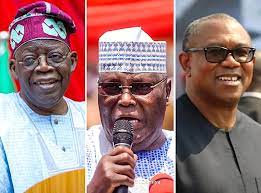
Former Vice President Atiku Abubakar reportedly paid $1.2 million to a U.S.-based lobbying firm to reposition his image within American policy circles. Before this time, the Federal Government, through intermediaries, committed $9 million to engage a U.S firm to counter allegations of religious persecution and reinforce its security narrative.
On the surface, both moves are legal, strategic, and not unusual in global politics. But taken together, they raise deeper questions about Nigeria’s communication capacity, political culture, and even its sense of sovereignty.
Lobbying in the United States is a structured industry, regulated under frameworks like the Foreign Agents Registration Act. Governments, corporations, and political actors routinely hire firms to engage lawmakers, shape policy conversations, and influence media narratives.
In that sense, Nigeria is not doing anything extraordinary. However, the context matters.
Unlike advanced democracies where lobbying complements strong domestic institutions, Nigeria’s growing dependence on foreign firms appears to reflect something more fundamental and a persistent struggle to control its own narrative, both at home and abroad.
What makes the current trend particularly striking is the political contradiction it exposes.
The Federal Government’s lobbying effort is aimed at countering claims amplified in the United States Congress that Nigeria is allegedly failing to protect Christian communities. Lawmakers such as Chris Smith have gone as far as describing the country as a “killing field,” to reinforce stronger action from the U.S.
In response, the federal government turned to professional lobbyists to reframe the narrative, to emphasis counter-terrorism efforts rather than religious persecution.
Yet, the opposition has been quick to criticise this move. Parties like the PDP and ADC have described the $9 million contract as wasteful, deceptive, and a form of image laundering.
But that criticism sits uneasily alongside reports that opposition figures like Atiku Abubakar also engages lobbyist to shape perceptions in the same Washington ecosystem.
The issue, then, is not lobbying itself but selective outrage.
Lobbying is about perception. It can open doors, influence conversations, and reframe narratives. But it has limits.
As one security expert aptly noted, credibility is not manufactured in Washington—it is earned at home.
No amount of well-crafted talking points can permanently offset realities such as insecurity, economic strain, or governance challenges. The world has moved to real-time information and global media scrutiny, however, perception must met performance.
This is where Nigeria’s approach appears conflicted.
While millions of dollars are being spent on external communication, critics argue that insufficient attention is being paid to the underlying issues driving negative perceptions in the first place.
As the PDP put it rather bluntly in it’s statement, “no lobbying firm can create narratives that will replace the lived experiences of the people.”
Perhaps the most uncomfortable question raised by this trend is this: why must Nigeria rely so heavily on foreign firms to tell its story?
The country is not lacking in communication infrastructure. It has a Ministry of Information, media aides, diplomatic missions, and a growing pool of public relations professionals.
Yet, when it comes to high-stakes international perception management, the instinct is to outsource.
This raises concerns about institutional confidence. Does the government trust its own communication systems? Are Nigerian PR firms insufficiently equipped for global engagement? Or is there a deeper belief that foreign validation carries more weight than domestic messaging?
If so, the implications are troubling. Because influence, much like sovereignty, is strongest when it is internally driven not externally contracted.
The financial dimension also cannot be ignored. At a time when economic pressures are high and public resources are stretched, the optics of spending millions of dollars on lobbying contracts are difficult to defend politically even if strategically justifiable.
Critics argue that such expenditures reflect misplaced priorities, especially when basic governance challenges remain unresolved.
Supporters, however, counter that global perception has real consequences for investment, diplomacy, and security cooperation and must be actively managed.
Both arguments have merit. They point to a larger tension between short-term image management and long-term credibility building.
To frame this debate purely as a question of “neo-colonialism” may be an oversimplification. Globally, countries routinely engage external expertise to navigate complex international environments.
Nigeria, as a major African economy, cannot afford to be absent from key policy conversations in Washington or other global capitals.
However, dependence is different from engagement. When domestic political actors increasingly rely on foreign intermediaries to fight local political battles or defend national narratives, it risks externalising internal issues and, in the process, diluting institutional authority.
Ultimately, the effectiveness of any lobbying effort will not be judged by the contracts signed or the firms engaged, but by outcomes.
Has Nigeria’s global perception improved?
Has investor confidence deepened?
Have concerns about insecurity been credibly addressed?
These are the metrics that matter. Because in the end, the most powerful message any country can send to the world is not crafted in a lobbying office, it is demonstrated through governance, stability, and measurable progress.
*Final Thought*
Nigeria’s growing engagement with U.S. lobbyists reflects that perception is a battlefield. But it also exposes a deeper challenge.
A nation that cannot confidently tell its own story at home may struggle to convincingly sell it abroad.
And no matter how skilled the lobbyist, the truth has a way of catching up.
No related posts.
