
Share!
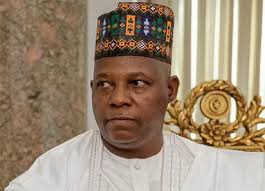
Vice President Kashim Shettima yesterday reaffirmed the resolve of President Bola Tinubu to overhaul Nigeria’s troubled power sector, declaring that the administration would not compromise on energy security as it pushes reforms aimed at unlocking investment and strengthening supply.
Speaking at the commissioning of the new headquarters of the Nigeria Electricity Liability Management Company (NELMCO) in Abuja, Shettima said the Tinubu administration was committed to building a transparent, accountable and technology-driven electricity market capable of driving national development.
He stressed that Nigeria’s economic future was closely tied to the stability of its power sector, noting that no serious nation could afford to gamble with energy security.
“What we are set to achieve requires data-driven decision-making, intelligent deployment of technology in asset management, and strong partnerships with both local and international stakeholders,” Shettima said.
He added that governance, transparency and accountability must remain central to the operations of institutions like NELMCO, describing the commissioning of the new headquarters as a symbolic turning point for the agency.
According to him, the facility should usher in a new era of efficiency, modernisation and forward-looking leadership in managing the financial liabilities of Nigeria’s electricity industry.
The vice president also used the occasion to call on private investors and international partners to take advantage of emerging opportunities in Nigeria’s power sector, assuring them of a stable and predictable policy environment.
“We are open for business. We are committed to creating a transparent and investor-friendly environment. Institutions like NELMCO show that we are not only serious about reform, but capable of sustaining it,” he said.
In his remarks, the Minister of Power, Adebayo Adelabu, said the sector reforms, anchored on policy overhaul, market liberalisation and institutional strengthening, are repositioning the sector for sustainability, efficiency and increased private sector participation.
The minister described the ongoing changes as deliberate steps to build a viable and investor-friendly electricity market. Central to the reform drive, he noted, is the Electricity Act 2023, which has enabled the decentralisation of the sector and opened the door for subnational participation.
This, he said, has already led to the activation of 16 state electricity markets, while also stimulating competition and innovation within the industry. He added that the development of a National Integrated Electricity Policy, the first in over two decades, now provides a unified framework for implementing the Act, strengthening coordination between federal and state governments and accelerating access to reliable and affordable electricity.
Adelabu further disclosed that the reforms have attracted over $2 billion in fresh investments into the sector, while ongoing efforts to transition the industry towards full commercialisation have significantly improved its financial outlook. According to him, sector revenue grew by 70 per cent in 2024, while government liabilities were reduced by about N700 billion, reflecting improved efficiency and cost recovery mechanisms.
The minister also pointed to improvements in generation capacity, which has increased from 13 gigawatts to 14 gigawatts, alongside record operational milestones, including a peak generation of 5,801.44 megawatts.
He said the government is addressing the long-standing metering gap through the Presidential Metering Initiative (PMI), backed by N700 billion mobilised through the Federal Account Allocation Committee (FAAC) and an additional $500 million World Bank facility, with procurement processes already underway to deliver millions of meters nationwide.
According to the minister, NELMCO has reduced inherited liabilities from N2.303 trillion to N146.76 billion and delivered over N700 billion in savings to the federal government through rigorous verification and reconciliation processes.
He added that NELMCO has also significantly reduced ground rent claims from N644 billion to N41.8 billion and achieved a 45 per cent reduction in post-privatisation liabilities owed by Ministries, Departments and Agencies (MDAs) to electricity distribution companies.
In his remarks, the Minister of Finance and Coordinating Minister of the Economy, Wale Edun, who also serves as Vice Chairman of NELMCO’s board, said efforts to stabilise the power sector would have far-reaching benefits for small and medium-scale enterprises and the broader economy.
He noted that ongoing reforms under the Tinubu administration, including the establishment of the Grid Asset Management Company, were designed to address structural weaknesses and improve efficiency across the electricity value chain.
On the legislative side, Chairman of the Senate Committee on Power, Enyinnaya Abaribe, represented by Senator Oyelola Ashiru, said the new NELMCO office would reduce government spending on rent while enhancing operational efficiency.
He reaffirmed the commitment of the National Assembly to provide the legal and regulatory support required for agencies in the power sector to deliver on their mandates.
Earlier, Managing Director and Chief Executive Officer of NELMCO, Mojoyinoluwa Dekalu-Thomas, said the agency had evolved from a liability management firm into a strategic stabiliser within the electricity value chain.
She disclosed that since its inception following the unbundling of the defunct Power Holding Company of Nigeria, NELMCO had been tasked with managing enormous legacy debts that once threatened the success of the sector’s privatisation.
Dekalu-Thomas added that beyond debt resolution, NELMCO had generated over N30 billion in revenue for the federal government through the sale and lease of non-core assets.
She explained that by clearing legacy obligations, the agency created the financial stability needed for successor companies in the sector to attract investment and focus on service delivery.
Looking ahead, she said NELMCO would transition into a strategic asset custodian, leveraging advanced data systems to optimise power sector assets and support liquidity.
She noted that the agency would also play a critical role in ensuring a smooth transition to state-regulated electricity markets under the new legal framework, while providing risk mitigation mechanisms for investors.
Describing the new headquarters as a “centre of excellence,” she said it would house a national register of power assets and serve as the hub for managing the complex financial architecture of the sector.
“As we move into a decentralised electricity market, NELMCO will remain the bridge between past liabilities and future opportunities,” she said.
Also, against the background of Nigeria’s deteriorating electric power crisis, a leading Nigerian energy expert, Prof Bart Nnaji, has outlined a number of measures he says the country has to take immediately to arrest the situation.
Delivering the 30th, 31st and 32nd graduation lecture of the Abia State University at Uturu, Nnaji, a former Minister of Power, outlined the steps as the restoration of the power purchase agreements (PPAs) between electricity firms and the federal government which the President Muhammadu Buhari administration suspended, the payment of the N6.8 trillion owed the power generation firms and the over N200 billion owed distribution companies, and allowing DisCos to charge cost-reflective tariffs.
Others are building a national super grid of 765KV and decentralising its operations so that a fault in one networked plant, for instance, would not cause a national blackout, and the development of Nigeria’s 210 trillion cubic foot of natural gas since 75 per cent of the nation’s electricity is thermal.
Nnaji, also a former Minister of Science and Technology who now leads the Geometric Power that drives the Aba Integrated Power Project (Aba IPP), also advocated that Discos be encouraged to have embedded generation firms, greater official attention to Discos which he said have been neglected more than other segments of the electricity value chain, and a review of the coverage areas by each distribution firm to make them more agile.
Drawing examples from India, China, Brazil, Egypt, and the United States, Nnaji noted that practically “each industrialising nation adds to the stock of its quantum of electricity every year”, contrasting it with Nigeria that “has not built a new power plant in the last 12 years except the 451MW Azura-Edo Power Plant in Edo State and the 188MW Geometric Power Plant in Aba, Abia State”.
The former minister, who had a storied career in the United States as a world-class scientist and research engineer, argued that people would not invest in new power plants without a financial instrument like the World Bank-backed Partial risk guarantee (PRG) to provide investors comfort.
“This is because it is exceedingly expensive to invest in power generation”, he told the university community that interrupted his speech intermittently with applause.
“It costs about $1.3m to construct one megawatt gas-fired plant, which is the cheapest in the country, as solar, wind, and hydroelectric technologies cost more”.
He added that investors would like to know how they could recoup their heavy and long-term investments, and the PGR is about the only realistic instrument to provide comfort to them.
He challenged the notion that investors would like to sign such PRGs with state governments following the implementation of the 2023 Electricity Act that permits subnational entities to regulate power generation, transmission, and distribution in their domains. The state governments have limited financial capabilities, he explained.
Nnaji pointed out that even if the federal authorities reversed the suspension of the PPAs today and work commenced immediately on the construction of a new plant, it would take at least three years to complete it, meaning that Nigeria would be one of the few countries in the world that would not expand its quantum of electricity in over 15 years.
Commending the federal government for setting up a 19-man committee headed by the Tinubu’s Chief of Staff to, among other things, accelerate the recovery of some stranded 1,600MW within two years, the Geometric Power chairman remarked that Nigeria needs 100,000MW to become a higher-medium economy by 2040, referring to the 30,000MW suggested by the Nigeria Electricity Supply Industry (NESI) by 2030 as unrealistic.
He said an electricity-hungry nation like the United States would do everything possible to increase its electricity by all means, including reembracing coal-fired plants in the face of power demand unleashed by generative AI data centres, comparing it to the return of coal plants by European countries in the wake of the energy crisis occasioned by the Russian invasion of Ukraine in 2022 that forced the European Union to impose sanctions on Moscow.
Nnaji lauded the federal government for returning to the 765KV Super Grid he convinced the Goodluck Jonathan administration to approve in 2012 but was abandoned after he resigned the same year over the manner of the privatization of Power Holding Company of Nigeria (PHCN) assets.
He advocated its regionalisation in technical terms rather than in the geopolitical sense, so that “a fault in one remote part of Nigeria would not lead to a nationwide outage, as is the case currently”.
The energy expert said that though his firm does not benefit from federal government’s subsidy payments to power firms, he “strongly supports the payment so that the power sector won’t collapse”.
He referred to the Discos in Ibadan, Benin, and Yola as examples of power distributors covering unwieldy geographical areas, calling for their review.
He said, in contrast, Aba Power covers only nine of the 17 local government areas in Abia State which he said enabled the utility to operate in an agile manner.
Among the distinguished guests at the lecture who commended Nnaji for the lecture which they described as a tour de force are the Chairman of the Abia State University Governing Council, Agwu Agwu, the ABSU Vice Chancellor, Prof. Ndukwe Okeudo, and the Special Adviser to Abia State governor on Tertiary Education, Dr Emeka Enyeazu.
