
Share!
Anioma State: History, Scholarship, and Political Advocacy
By Sunny Ibeh Jnr
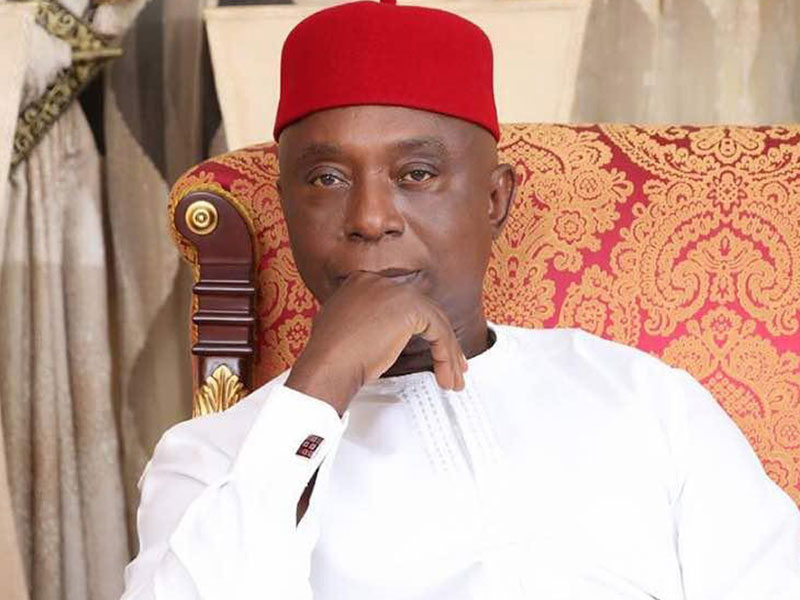
The renewed advocacy for the creation of Anioma State has once again gained national attention, largely driven by the sustained efforts of Ned Nwoko. His consistent engagement, advocacy, and investment through hard-earned resources in advancing the Anioma cause herald a commitment that has helped re-ignite public discourse around a demand that is cogent and conciliatory in status.
However, it is important to note that in Anioma State agitation, Senator Ned Nwoko is reviving a cause that different people within the Anioma nation have tried to achieve, but could not, given a litany of both political and geopolitical reasons. In this regard, we must make peace with the fact that the Anioma State question is not a contemporary invention. It is a longstanding political aspiration that has evolved over decades. Contextually, it has been shaped by historical circumstances, interrupted by political interests, and periodically revived by renewed advocacies which unfortunately have severely fallen through.
A walk down memory lane shows that the agitation for Anioma State dates back to Nigeria’s early post-independence era, with notable momentum in the 1970s. Consequently, one of the earliest structured advocacies has been attributed to Chief Dennis Osadebay, an influential political figure from the old Midwestern Region, and other Anioma elites who sought administrative recognition and political inclusion for their people within Nigeria’s evolving federal structure as it were.
In the Igbo linguistic framework, the word “Anioma” is originally an Igbo word, which means “Good land.” The term “Anioma” itself emerged in the mid-20th century as a unifying identity for Igbo-speaking communities west of the Niger River.
The agitation for the creation of Anioma State got intensified during the 1976 state creation exercise under General Murtala Mohammed, even though the proposal was not approved.
It is however instructive to note that at the core of this agitation are enduring concerns of the people, which were centered on the fervent desire for cultural recognition, political representation, and equitable distribution of resources. These concerns, even to date, are explicitly rooted in the historical experiences of Anioma communities within the old Midwestern Region, later Bendel State, currently Delta State.
From a demographic perspective, Anioma comprises nine Local Government Areas in present-day Delta State, which equally form the Delta North Senatorial District, the very people distinguished Senator Ned Nwoko represents at the upper echelon of Nigeria’s legislative purview, the Red Chamber. Linguistically and culturally, the Anioma people, often described as Western Igbo beyond the Niger coastal region, share strong affinities with the broader Igbo ethnolinguistic group, with dialects such as Enuani, Ika, and Ukwuani which show significant mutual intelligibility with central Igbo variants.
Eminent researchers in scholarly literature have consistently situated Anioma within the Igbo cultural and historical continuum. Remarkably, works such as those by Don Ohadike (1994) and M. A. Onwuejeogwu (1987) provide detailed historical and anthropological evidence linking Anioma communities to broader Igbo civilization, including connections to the Nri sociopolitical system. Moreover, Susan Martin (1996), a renowned American historian and archaeologist at the University of Cambridge, affirms Anioma as a regional identity within the Igbo world rather than a separate ethnic origin.
Evidently, historical events have also played a role in shaping Anioma identity. Philip A. Igbafe (1971) documented the Ekumeku resistance. For proper context, the Ekumeku resistance was a coordinated anti-colonial movement that emphasized the unity of western Igbo communities. Also, the Nigerian Civil War (1967–1970) contributed to political separation and identity complexities that continue to influence perceptions today, as noted by Opone Chukwuemeka (2022).
Despite divergent views, the scholarly consensus, backed by empirical evidence, strongly favours the classification of Anioma within the Igbo ethnocultural discourse. As such, the identity debates that negate the aforementioned lack firm and reliable historical substance.
The call for Anioma State, therefore, is not merely a political request but an expression of long-standing aspirations for fairness, representation, and administrative balance within Nigeria’s federal structure. A unified approach among Anioma stakeholders: political leaders, traditional institutions, and intellectuals, remains critical to advancing this noble objective woven in expediency.
Just like the name implies, “Anioma” is indeed a “Good land”; not just a good land but a blessed and highly endowed one with talents of continental and global repute, and a deluge of essential natural resources spread across its communities. For instance, crude oil and natural gas are found in the Ndokwa axis, precisely in Kwale, Utagba-Uno, Ashaka, Aboh, and Okpai, the latter hosting a major gas-powered plant. The area also holds one of Nigeria’s largest lignite deposits in Ogwashi-Uku, Ubulu-Uku, and Issele-Uku, alongside kaolin and silica sand in the same belt and parts of Asaba.
Gravel and laterite are in abundance in Ibusa, Okpanam, and Issele-Azagba, while limestone deposits are indicated in parts of Ndokwa. Agriculturally, the Anioma people are largely agrarian. Anioma is highly fertile, producing cassava, yam, maize, rice, oil palm, rubber, plantain, and banana across Oshimili, Aniocha, and Ndokwa areas, with abundant timber resources in forested zones. In addition, the presence of the River Niger along Asaba and surrounding waterways supports fishing and enhances the region’s economic and ecological significance.
Interestingly, Anioma has produced a remarkable number of globally influential figures across fields of endeavour. Notable among them are Dr. Ngozi Okonjo-Iweala, the Director-General of the World Trade Organization (WTO) and former Managing Director of the World Bank; Tony Elumelu, founder and chairman of United Bank for Africa (UBA); Jim Ovia, founder of Zenith Bank; and Nduka Obaigbena, media mogul and owner of Arise News and ThisDay newspaper.
The region is also prominent in sports through the sterling imprints of athletes such as Jay-Jay Okocha, Sunday Oliseh, Wilfred Ndidi, and Alex Iwobi, while intellectual, legal and cultural contributions include Buchi Emecheta, Demas Nwoko, Professor Pat Utomi, Elizabeth Isichei, and Zulu Sofola. Others include Senator Ned Nwoko, an international lawyer with experience in arbitration and constitutional matters, and Senator of the Federal Republic of Nigeria Dr. Olisa Agbakoba, a Senior Advocate of Nigeria and former NBA President known for human rights advocacy among numerous others.
Without any iota of doubt, Anioma has all it takes to exist on its own pedestal; political and geographical categorization as a state in Nigeria. Quite frankly, the creation of Anioma State would create a balance in the place of equity and fairness, strengthen affinity across the Niger and yield bountiful dividends to the Nigerian state.
Most certainly, the creation of Anioma State would represent a step toward addressing perceived imbalances, strengthening inclusivity, and enhancing national cohesion. The advocacy led by Senator Ned Nwoko foretells a continuation of a historical movement whose relevance persists, and a child of necessity whose time has come.
Sunny Ibeh Jnr
Communication Strategist | Public Affairs Analyst | Leadership & Policy Advocate
Abuja, Nigeria
